How to Paint the Golden Hour: Capturing Summer Light in your Paintings

Let’s take a trip together.

Come with me to a special place. To that hour, near the end of a summer day, when the sun sets aside its ordinary work of revealing the world and becomes a painter.

The light drops low and turns generous. Spilling across the field, it catches the edge of a shoulder, sets the grass aglow, and for a few minutes the whole world looks like something worthy of our full attention. Then it fades away.
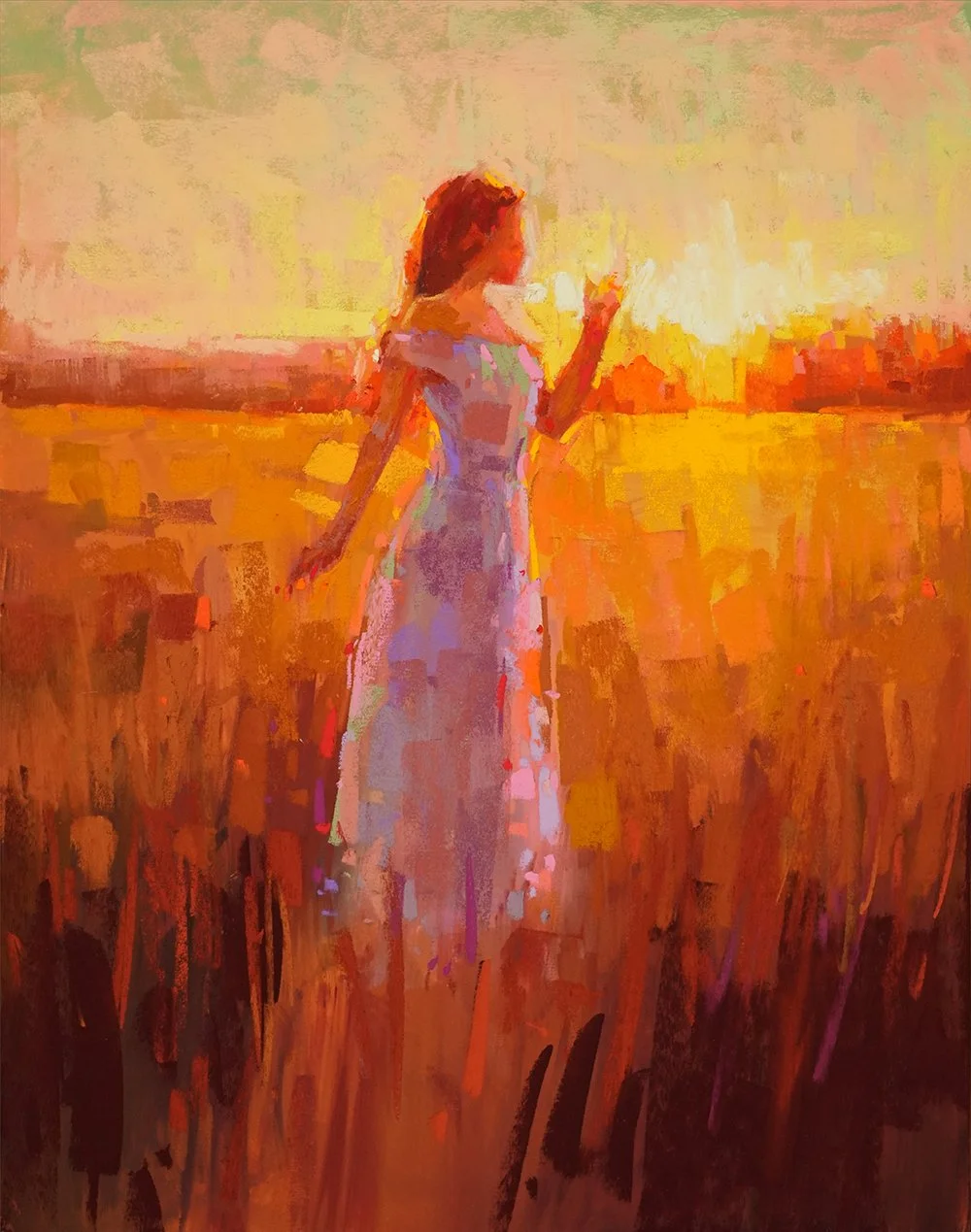
Summer Gold, Alain Picard, 14x11” pastel on UART

It always fades. That’s the part of what makes the moment so precious.

We are the ones who take notice. While others walk past the glow on their way to dinner, we stop to soak in the wonder. Because artists see beauty, and search it out. We set the stage, wait for the right time of day, and hold still long enough for the muse to visit us. 

We are stewards of the light. Gathering its glistening beauty into pictures to share with those around us, so they too can discover the magic of the moment.


This summer, search out that golden hour. You may find it by the sea, in an open field, your own backyard, or somewhere far from home.

Bring a camera, a sketchbook, pastels, or simply your full attention. Stand in the last warm light before it slips away, and let it change you. Then capture your experience on paper, so the rest of us can feel it too.

The light is already on its way. Where will you meet it?

Keep painting, 
Alain

When Does Less Become More?

I've been fascinated by this question lately:

What happens when you distill a figure down to its absolute essence? 

Not the careful rendering or subtle details. Just bold shapes, powerful gesture, and expressive color.

The answer surprised me. When you take away all the complexity, the gesture itself becomes the story – pure, powerful, and undeniable.

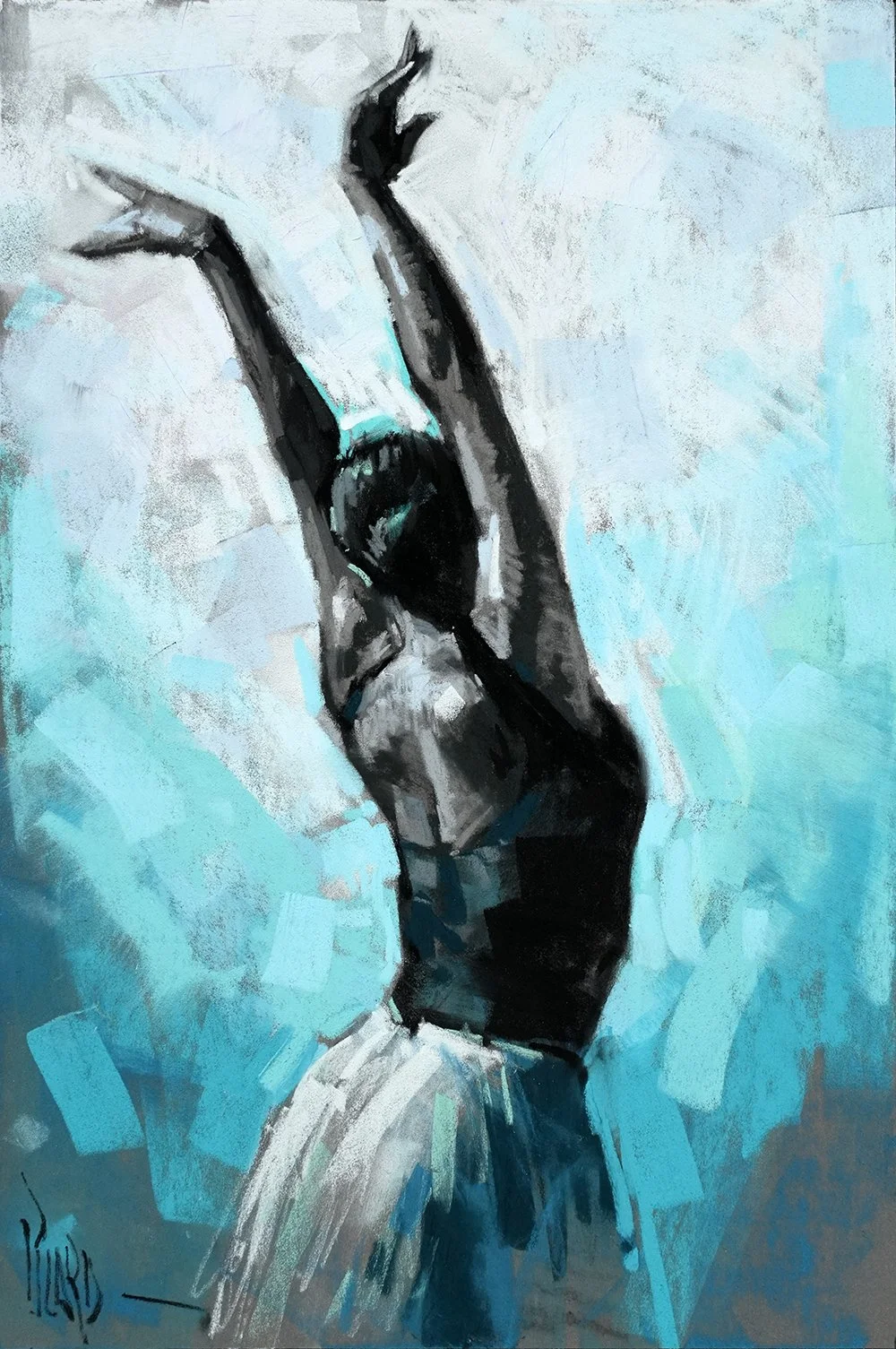
I recently completed two dancer paintings that explore this idea. Instead of my usual painterly approach, I simplified these ballet gestures down to their graphic core. Posterizing the reference, using bold tools like markers to distill the pose, and chunky pastels to capture the gesture were all part of the process. But what changed the experience most dramatically was limiting each painting to a single color against grays—one in vibrant pink, the other in turquoise blue.

Ascension - Expression in Pink, Charcoal & Soft pastel

Here's what I learned about capturing powerful gestures:

1. Gesture becomes everything when all else fades away. By reducing the figure to essential shapes and a monochromatic palette, nothing distracts from the gesture itself. The contour line, that sweeping arc of an arm, the elegant curve of the spine, carries all the expressive power. You see the movement, the energy, the dancer's spirit in a fresh way that can get lost when focusing on rendering every detail. 

2. Bold tools invite bold decisions. Designing with markers and paint pens changes how you see the figure. Thumbnail sketching with these tools won't let you fuss or render. They demand commitment in values and shapes. And that commitment translates into confident, expressive work that captures the essence of motion.

Crescendo - Expression in Turquoise, Charcoal & Soft pastel

3. A single color speaks louder than many. Wow. Using only pink or turquoise against monochrome grays was surprisingly effective. Instead of wrestling with complex color relationships, that one vibrant hue carries all the emotional weight. Pink feels light, ascending, free. Turquoise feels dynamic, building, and powerful. Gesture and expression have the greatest impact when color steps back and lets movement take the lead.

The irony? By doing less—fewer details, one color, fewer careful marks—these paintings feel more powerful than if I'd rendered every fold of fabric and subtle skin tone.

Sometimes the strongest statement is the simplest one.

If you've ever felt overwhelmed by trying to capture every detail in your figure work, I encourage you to experiment with graphic simplification. Posterize a photo to just a few values. Grab some bold tools to distill your design. Try working with just one expressive color. See what happens when you let go of perfection and reach for pure expression instead.

You might be surprised by what emerges.

Keep painting,
Alain