This isn't really a flower painting

I’ve got a question for you:

When you look at a flower arrangement, what do you see? 

Petals and leaves… or shapes?

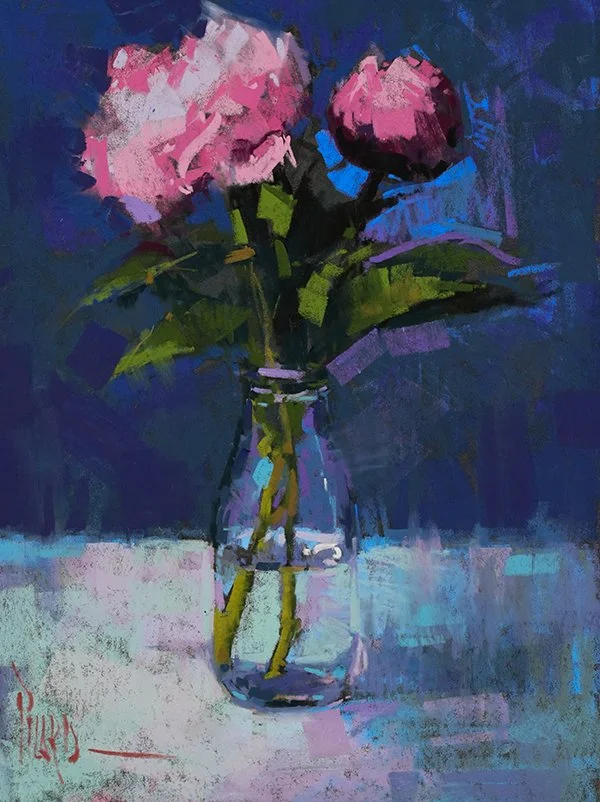
Pink Blossoms in a Bottle, 12x9" pastel

Look at this painting for a moment.

Yes, there are two pink peonies in a glass bottle. But step back and squint. Suddenly the petals disappear and you're left with something much simpler: two bold pink masses above a cool glass shape. Dark background, light tabletop, pink spheres.

That's the whole painting.

The marks are bold and free, the color is vibrant and expressive, but it all starts with those three simple shapes working together. Once you see the design hiding inside the subject, everything changes. You stop asking "how do I paint a peony?" and start asking "how do I want to arrange these shapes?"

That shift in thinking is where bold, confident still life painting begins.

And it works on any subject. Fruit, flowers, a simple cup on a table. When you train your eye to see shapes first, your compositions become stronger, your color decisions become clearer, and your marks become more purposeful and free.

This is exactly the kind of thinking we’ll bring to our still life painting during the free Still Life Workshop.

Save your seat now for the free Bold & Loose: 3 Keys to Painting Still Life in Pastel workshop and paint along with us. I think you’re going to love it.

The secret to bold color in still life

What makes a still life painting feel alive and vibrant rather than flat and ordinary?

Most artists think the answer is in the subject, finding something beautiful or interesting to paint. But the real secret is in the light.

Here's a simple idea that will change the way you see your still life setups forever:

The color of your light source sets the color mood of your entire painting.

Warm light bathes your subject in golden, glowing tones. Cool light shifts everything toward blue and violet. And when you understand that, you stop reacting to what's in front of you and start designing the color experience you want.

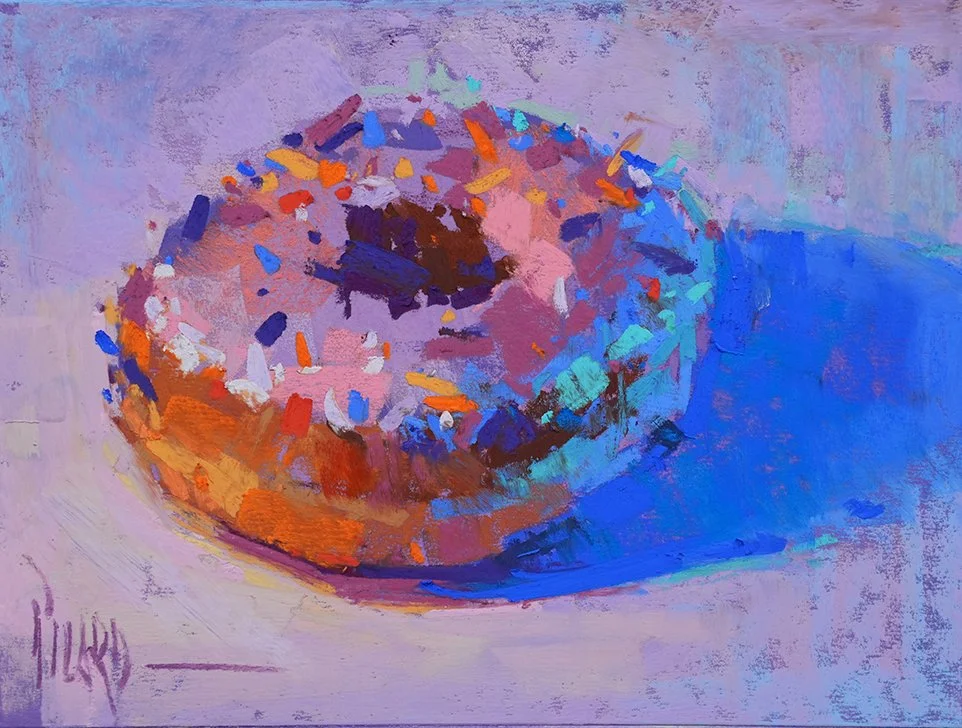
Alain Picard, Pink Donut in Cool Light, 6x8” Pastel on UART500

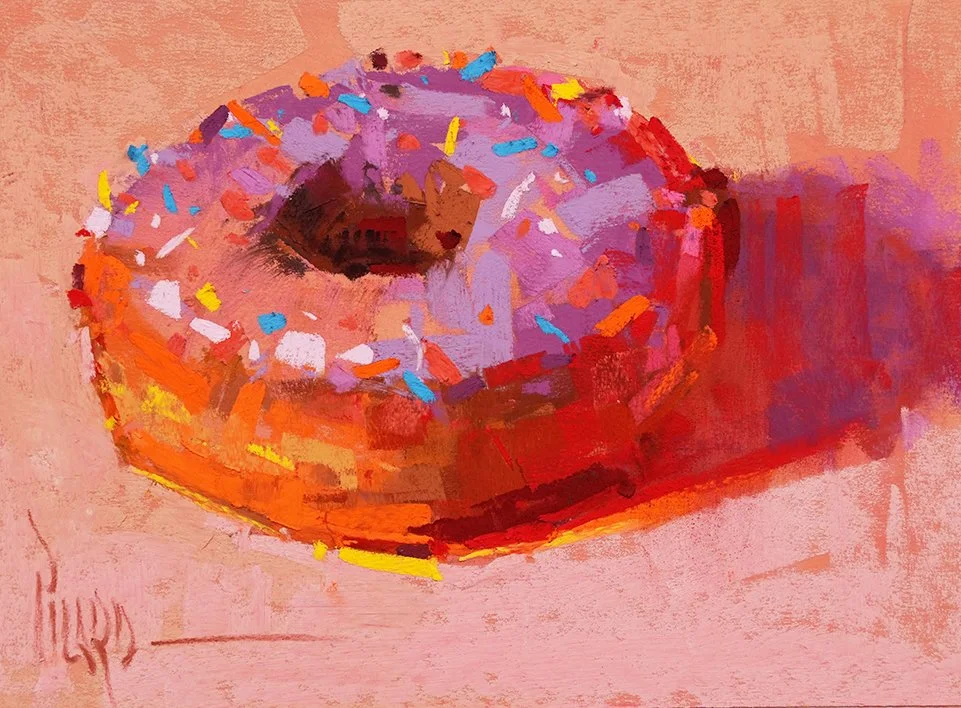
Alain Picard, Pink Donut in Warm Light, 6x8” Pastel on UART500

Look at these two paintings of the same pink donut. Exact same subject and composition. The only difference is the light source. A warm light produces a rich, glowing, orange-red painting. A cool light transforms the same donut into a soft, blue-violet one. The subject didn't change. The light did. I couldn't resist putting my own bold spin on them.

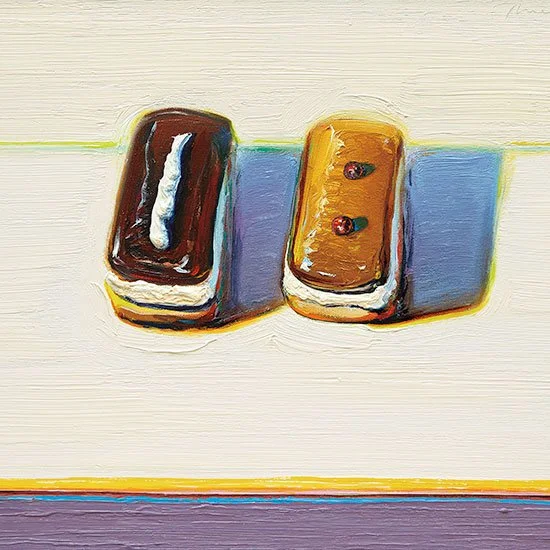
Wayne Thiebaud, Eclairs, 1963 oil on canvas

The great American painter Wayne Thiebaud understood this so well. His cakes and pies practically shimmer on the canvas because he designed bold color contrast right into his light. He wasn't just painting desserts. He was designing with light.

Here's a quick exercise to try:

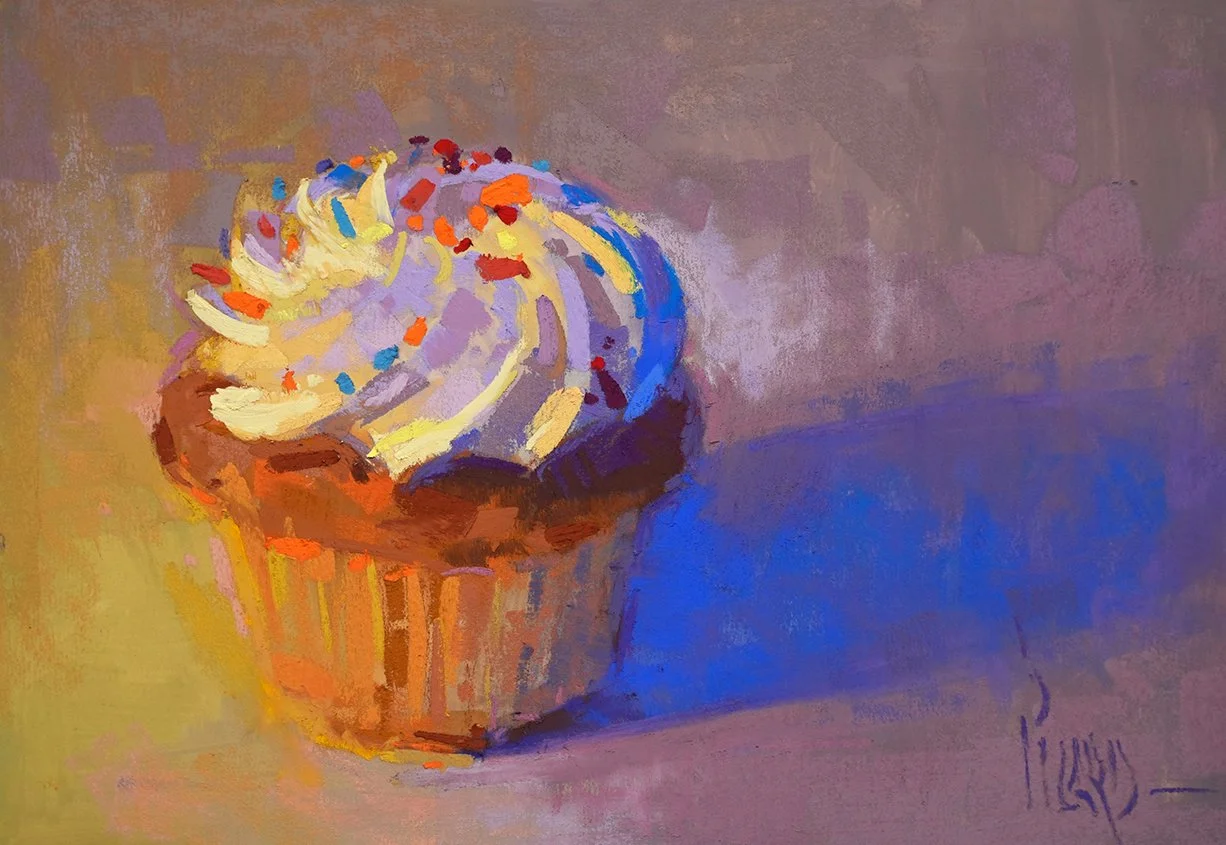
You don't need fancy lighting equipment for this. Whatever you have at home will do. Grab any simple object from your kitchen, an apple, a cupcake, a pepper. Paint it once under a warm lamp (yellow cast to the light). Then swap to a cooler light (bluer cast) or move it to a north-facing window and paint it again. In both cases, be sure your subject casts shadows. Notice how the entire palette shifts. That's the color of light at work.

Alain Picard, Cupcake with Sprinkles, 7x10” Pastel on UART500

This colorful exercise is just a taste of what's coming your way. On March 25 and 27, 2026, I'll be hosting a free workshop called Bold & Loose: Painting Still Life with Pastel. Save your seat now for the free Bold & Loose: 3 Keys to Painting Still Life in Pastel workshop and paint along with us.

I think you're going to love it.

An autumn romance sparked in my studio

There's something about October light that stirs the creative spirit. Farm stands overflow with gourds in every shape and size, orchard branches hang heavy with fruit, foliage painted in golds and reds. For pastel artists, autumn is filled with gifts, like complementary colors appearing naturally or the way light falls beautifully upon a simple pumpkin.

But here's what I've learned: the magic isn't in finding the perfect pumpkin. It's in discovering the relationships between the forms.

Noble Gourd, 9x9” pastel on Pastelgrain

The One I Almost Overlooked

I almost painted it alone.

The dark mysterious gourd—gorgeous, with deep shadows and a signature green streak—was clearly the star of this harvest show. Dramatic and confident. But something felt incomplete.

So I reached for the quiet one. A small, pale pumpkin I'd almost overlooked at the farm stand. Unassuming. The color of morning fog.

That's when a harvest romance was born.

That white pumpkin wasn't there to support its more important accomplice—it was there to make you feel it differently. Suddenly, reds felt richer, the green more alive. Shadows gained a depth that I couldn't have painted in isolation.

It's a timeless story; how we become more ourselves in the presence of another.

Harvest Romance, 9x12” Pastel on UART

Start Your Own Harvest Story

Here's an approach to still life storytelling that has served me well:

Start with one. A single pumpkin, gourd, or apple. One light source. Observe how light reveals its character. Notice the shadow patterns. There's magic in simplicity.

Then invite another. Add something that contrasts in size, color, or texture. Watch how the two begin talking to each other. A smooth apple beside a copper kettle. A rough gourd supporting a pale pumpkin. Unlikely accomplices making shadows shift as new relationships form.

Finally, add a third character. It could be a texture, some autumn leaves, a vessel, or another piece of harvest bounty. Now you have rhythm, conversation, and a story unfolds. But here's the secret: you're not painting everything. You're discovering which elements belong together.

Visit your local farm stand or orchard. Be playful and stay curious. Try different combinations. Use simple backgrounds so your subjects can shine. And remember: the best discoveries often come from the characters we almost overlooked.

Who knows? Maybe your own autumn romance will spark in the process.

Confidants, 10x10” pastel on UART

Your Autumn Invitation

Autumn doesn't rush. Neither should we.

This season is generous with gifts for artists. Whether you’re feeling led to paint, sketch, photograph the beautiful foliage, or simply arrange beauty on your kitchen table—the harvest invites us all to slow down and notice relationships.

Bring autumn home. Set up a still life with a single light. Start with one beautiful thing, then see who it wants to meet. The conversations might surprise you.

Keep Painting,
Alain

Looking for some pumpkin pairing fun to get you in the mood? Watch this FREE demonstration HERE!

How to Create Expressive Floral Abstractions This Spring

Spring is a wonderful season of rebirth, and there’s nothing quite like florals to allow our creative spirits to bloom in new ways. I’ve recently discovered this magic myself by moving beyond literal representation to capture the emotional essence of a subject. This resulted in an expressive floral abstraction that speaks to the heart.

Alain Picard, L’Essence de L’Amour, 12x12” pastel on UART 400

Here are a few thoughts on my experience so you can explore your own floral abstractions.

The Power of Personal Expression

When you integrate design principles with color knowledge and your own unique touch, something wonderful happens. Your personal artistic voice begins to flourish, allowing you to interpret floral subjects with fresh emotion and perspective. Let your design ideas lead you in this exploration of the abstract. Then layer the poetry of color upon this foundation. 

Soft pastels can offer an ideal medium for this exploration. Their velvety texture creates both delicate subtleties and bold presence that can transform a floral subject like pink peonies into abstract expressions of beauty.


Finding Your Flow

Successful floral abstraction involves listening and responding to what emerges on your surface. The empowering truth is that you can leave as much of the representational aspect behind as you wish. Some of us will hold onto more recognizable elements of our subject while emphasizing abstract qualities. Others will venture into pure abstraction where only color, form, and emotion remain. Each journey into abstraction can be as unique as you are, so be bold and explore.

Consider these approaches to enhance your expressive work:

  • Seeds of Design: Harness the power of value shapes as the seeds of your abstract design 

  • Dynamic Textures: Allow the gritty, intimate qualities of your materials to become part of your expression

  • The Power of Scale: Larger works often bring new power and dimension to your abstractions

  • Multimedia Exploration: Underpaintings in watercolor or acrylic can add exciting and spontaneous new dimensions to your abstraction


Let Your Creativity Blossom

This spring, I invite you to create an expressive floral abstraction that flows from your unique artistic voice. Let your own personal design elements and color choices take root as your expressive side blossoms with new life. Move from observation into heartfelt expression as you allow how you feel about the subject to take priority over the facts set before you.

Whether your creative voice is just beginning to bud or reaching full bloom, we’re all tending this creative garden together. That is a beautiful sight to behold.