How to Paint Loose, Expressive Landscapes

Ever struggle with overworking your landscape paintings? 

Palm trees are a good test of your resolve. All those big fronds and tiny leaflets inviting you to draw every line. Just by observing too closely the painting can stiffen up before you know it.
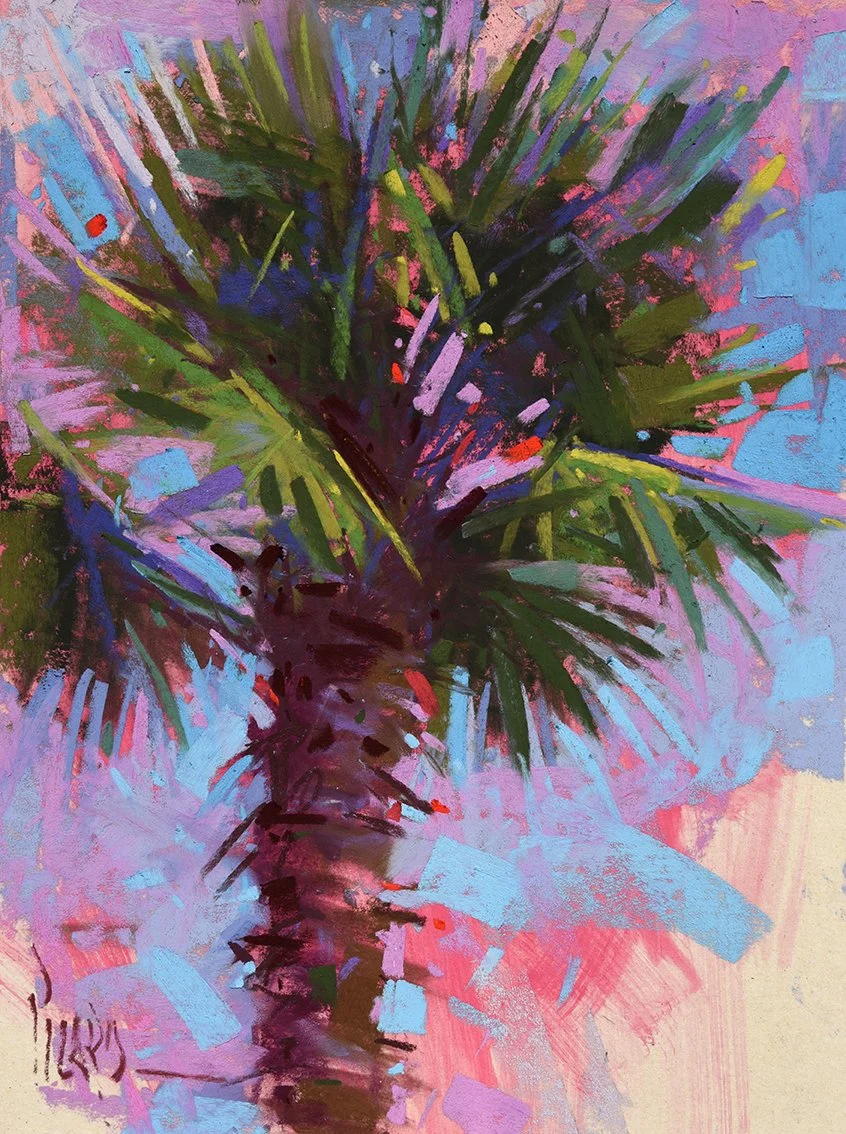
I painted this colorful palm tree on location in Croatia. Standing before that single palm against a big blue sky, I reached for pink, violet and deep crimson. Nothing static, nothing rendered. The color is my response to the moment rather than a record of what was actually there. The energy of the wash and pastel marks is where the movement comes from. Expressive color brings feeling.

So how do we capture that energy and life?

Luckily I snapped a photo of that palm tree, so we can paint it together. We'll look at:

✔️ Bold marks that carry energy
✔️ Color that brings life to the scene
✔️ Suggestion over detail for a painterly result

This painterly approach is a taste of what unfolds in The Painterly Landscape Course. You'll discover the power, fun and freedom of using bold marks and expressive color in your paintings with a complete Painterly Roadmap to guide you. We're also giving the Practice Makes Painterly Bonus to everyone who enrolls in the course before September 9 at 7pm ET when the doors close. This helpful guide is packed with 6 exercises for loose, fresh painting, including the 100-stroke challenge.


Want to paint loose and free? Now's your chance. Enroll in The Painterly Landscape Course by Wednesday, September 9 at 7pm ET, and take the first step toward bolder, looser paintings in pastel that impact the viewer with energy and expression. Seven Milestones take you on a journey of transformation in your landscape painting from design all the way to a beautiful destination. 
Beyond Green: How Expressive Color Brings Landscape Paintings to Life

Have you ever been overwhelmed by green?

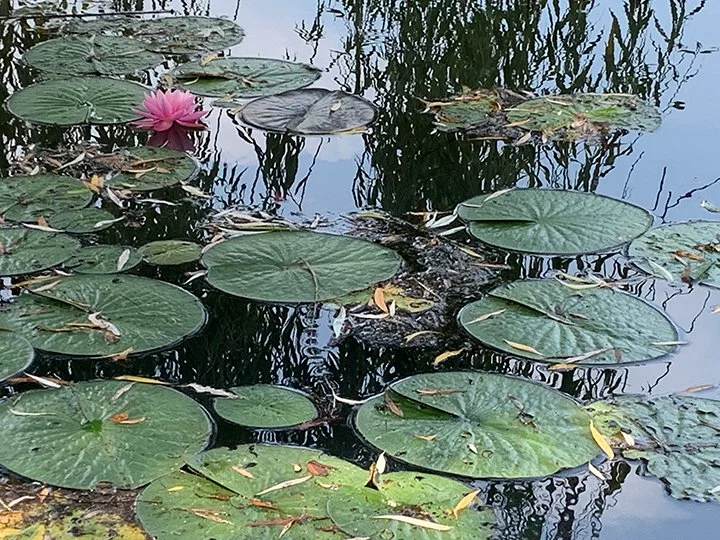
Everything in front of me that morning was green.
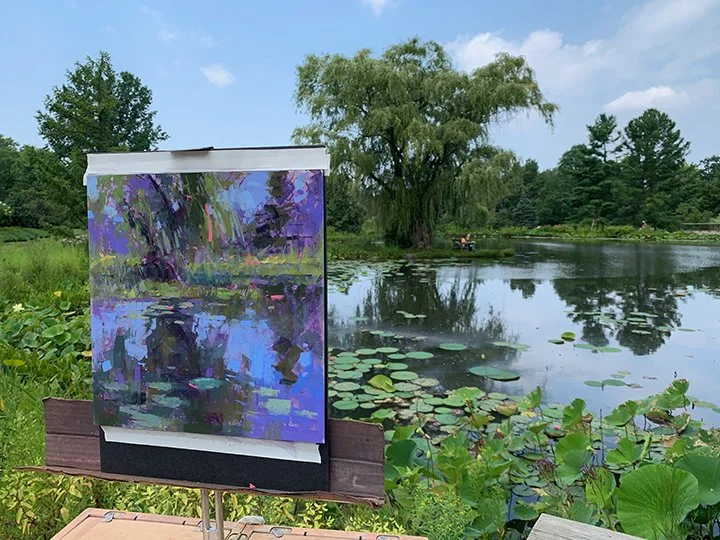
Green willow. Green pads. Green reflection running through green water. A summer lotus pond doing what a summer pond does best.

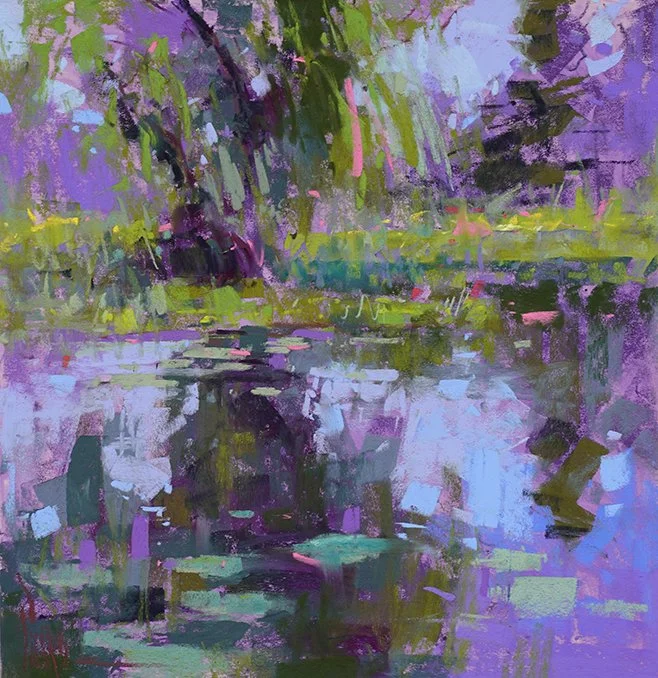
So I painted it violet.

Not because violet is a clever trick, and not because I was trying to be different. I painted it violet because after a few minutes of standing there, I stopped asking myself, “What color is that?” and started asking, “How does this place make me feel?” Two very different questions, and they lead to two entirely different paintings.

Lotus Pond, 12x12" pastel

Here's what I want to encourage you with, and it took me years to trust;

You can let go of description without letting go of design.

Look at the painting and you'll see the pond is still there. The willow sits where the willow belongs. The shoreline runs where it should. The reflection drops straight down beneath the tree and holds the whole square together. The pads get smaller as they travel back. Everything structural is faithful.

What I threw away was the detailed description. The local color. The tidy edges. Every fact about what a lily pad actually looks like when you lean over and stare at one.

All that information, and I used almost none of it.

That's the trade-off, and I’ll take it every time. Most of us think we owe the scene an accurate report. Truth is, we’ve got cameras for that. As artists, what we owe is an honest response.

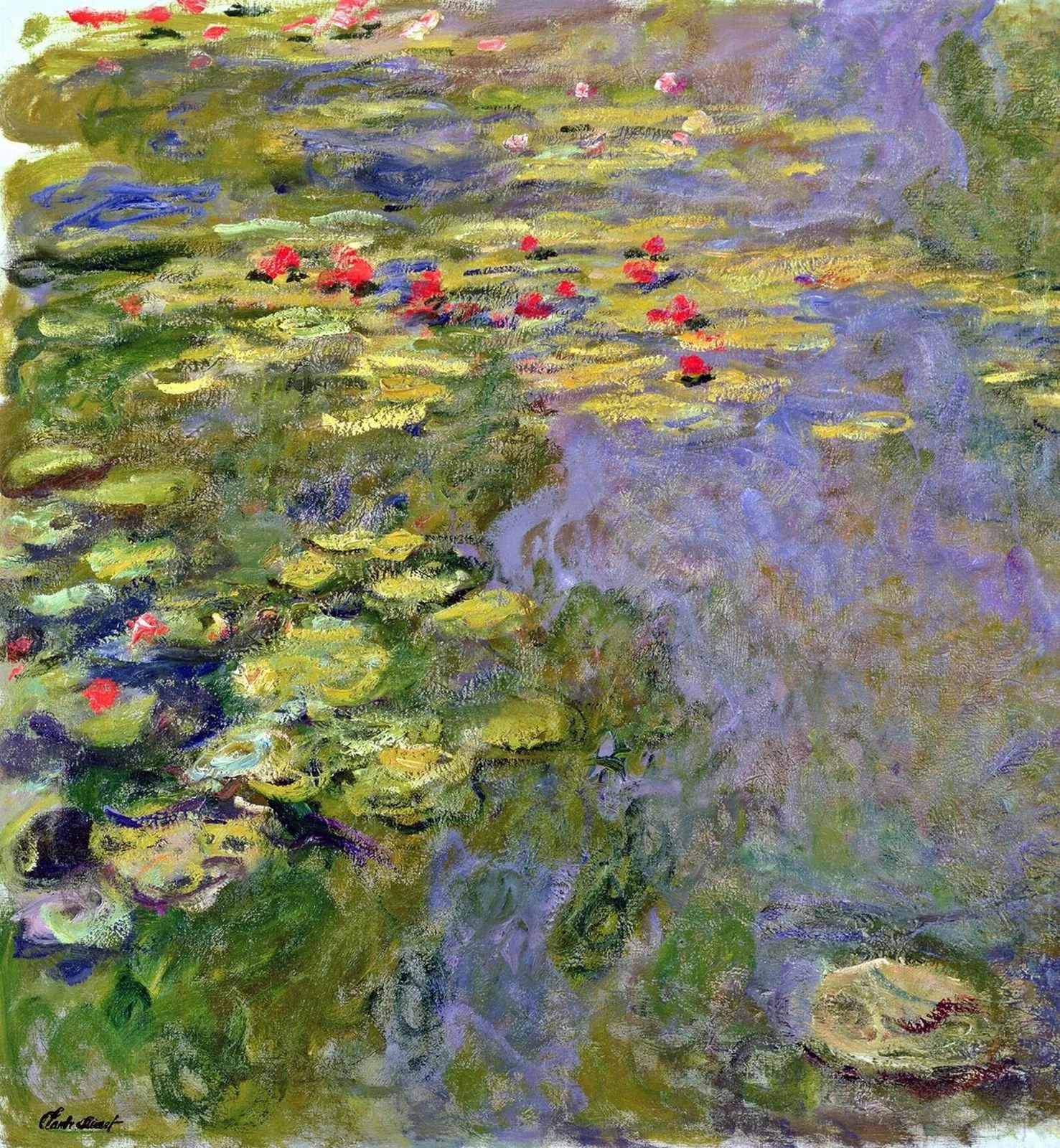
Monet understood this better than anyone. He painted the same pond hundreds of times, and it was never really about the water. The surface was an excuse. An excuse to chase color, to arrange shapes, to make marks, to wonder. The pond gave him permission to play, and he took it for the rest of his life.


So here's my summons for you this summer.

Go stand in front of something green and refuse to paint it green.

Keep the design. Get the big shapes right. Put the darks where the darks belong. Then let the color be yours. Let it be violet, sienna, burgundy or gold, whatever your heart is longing for. Nobody who sees your painting will hold you to what was actually there. 

They'll only ask whether it feels alive. 

They want to feel what you feel.

And trust me, they will.

Keep painting,
Alain

This is the kind of playful discovery we do together during Landscape Week, coming up August 31- September 4. Three live lessons, three ways to loosen up.

Discover the Power of Simplicity

What if I told you that the landscapes you admire most—the ones that make your heart skip—aren't painted with more detail, but with profound simplicity? 

There’s a secret that the masters knew: When you stop trying to paint everything, you start painting the true feeling of the moment. That's the power of simplicity.

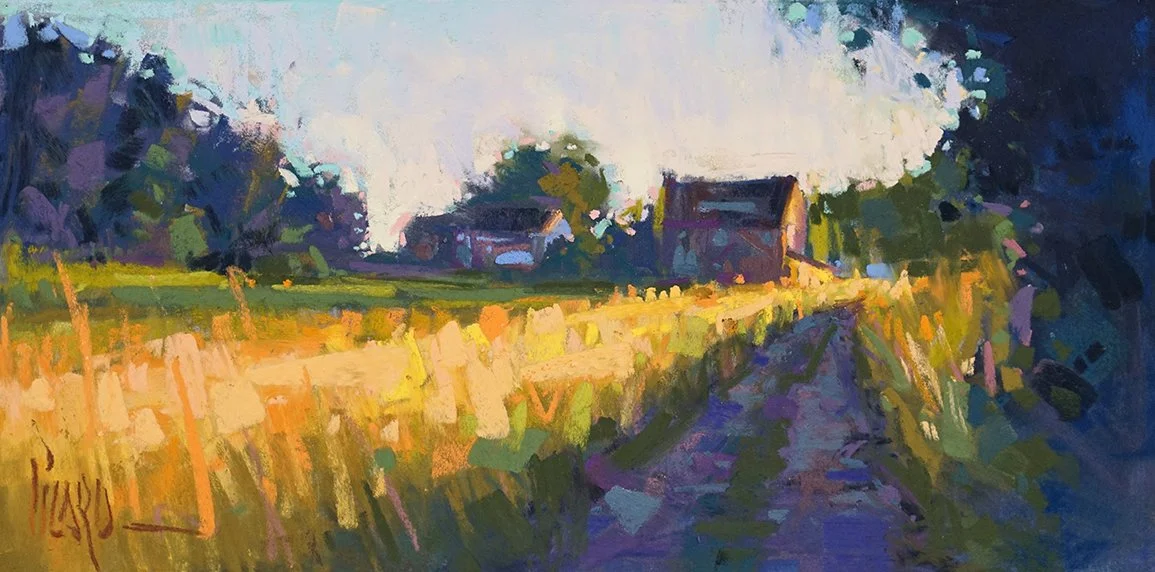
I'm thrilled to share the newly remastered painting demonstration - "Blue Country View".

Blue Country View, 6x12” pastel on UART

This European farmhouse scene is a perfect context to explore how reducing complex landscapes to their fundamental light and shadow patterns can actually make them more compelling, not less.

You'll discover a painterly approach to landscape painting: starting with a bold blue underpainting to establish the cool shadow areas, then gradually introducing warm golden ochres and oranges to create that gorgeous complementary harmony. This video goes way beyond technique, it's about learning to see - how to squint past the details and capture the quality of light that makes late afternoon so magical.

Whether you're drawn to the methodical dark-to-light process, the atmospheric blending techniques, or simply want to experience the meditative joy of painting the European countryside alongside me, this remastered version offers enhanced audio alongside the same solid instruction. Perfect for both longtime subscribers revisiting a favorite lesson and newcomers discovering it fresh!

Here's the truth: The farmhouse will always be there, but that golden light raking across the field? That's fleeting.

Let's capture it together while your inspiration is burning bright.

If this peaceful countryside scene inspires you, save the date for Landscape Week on September 8, 2025! It's the perfect opportunity to dive deeper into painterly landscapes together.

Where Will Your Creative Journey Lead You?

What would you discover if you committed to seeing one familiar place with completely fresh eyes?

Europe is a rich environment for the creative soul, with so much history and artistic beauty. My European travels led me to France for a painting retreat filled with unanticipated discoveries. I knew this region was filled with ancient architecture, churches and stonework. What I found was so much more than I imagined—a reminder that creative journeys often take us beyond our original destinations.

Alain Picard, The Bell Tower, 12x9” pastel

The Art of Creative Discovery

When we set out with artistic intention, magic happens. My search for antiquity in the limestone-filled Dordogne became an exploration of how light transforms everything it touches. Ancient stone steps became stages for shadow play. Weathered doorways revealed stories written in texture and time.

This is the power of focused creative exploration—when you look for one thing deeply, you discover ten things you weren't expecting.

Alain Picard, Old Village Steps, 12.5x9.5” pastel

Your Backyard Adventure Awaits!

You don't need a passport to embark on your own artistic journey.  Find adventure in your own backyard! Consider these possibilities:

Follow the Light Choose one subject—a garden wall, church steeple, or stone steps—and visit it at three different times of day. Watch how changing light creates entirely different paintings from the same view.

Texture Hunt The artist’s gift is seeing the extraordinary within the ordinary. Spend a week seeking out interesting surfaces. Tree bark, weathered fences, old brick—each tells its own wonderful story through texture. Create quick studies focusing solely on mark-making that captures what you feel.

Color Quest Pick an unexpected color challenge. Maybe it's finding beauty in rust, celebrating the subtleties of gray, or discovering how many versions of "white" exist in a single tablecloth.


The Journey is the Destination

What struck me deeply in France wasn't just the limestone—it was how actively searching transformed my seeing. Being present and open to new creative encounters. When you declare "This week I'm studying shadows" or "I'm going to seek out stone textures," you sharpen your artistic vision.

Alain Picard, The Old Mill, pastel en plein air 12x8”

My plein air sketches taught me to see textures I'd never discovered before, limestone paintings led me into an understanding of color I hadn’t imagined. Each session builds new skills that now inform all my work. What about you? 


Start Where You Are

Your fresh creative journey begins with a simple decision: What will you explore deeply? Maybe it's the play of light on water, the personality of old buildings, or the way textures give surfaces their character.

The destination matters less than the search. When we approach our surroundings with artistic curiosity, even familiar places reveal new possibilities.

This week, choose your focus. Where will your creative journey lead you?

Keep painting,

Alain

If you’re looking for a fresh adventure in mark-making, try my Expressive Mark-Making Mini Course. It’s an amazing way to explore your own vocabulary of texture, line and tone in pastel!

Dive Into Water Lilies And Find Your Creative Flow

Water lilies have captivated artists since Monet transformed them into impressionist icons. I’ve had the joy of painting water lilies in many places from France to Ohio, and New England where I live. These floating beauties offer such rich learning opportunities for artists at every level, from dealing with ellipses to capturing surface reflections and exploring what lies beneath the water.

Here are a few ideas to spark your own creative flow.

Alain Picard, Les Jardins D’Eau, 6x12” plein air pastel on UART

Start with Abstract Shapes

Before diving into color, begin with thumbnail sketches to discover the abstract patterns hiding in the garden. Focus on value shapes—see lily pads as interlocking puzzle pieces of light and dark rather than detailed flowers. This approach calms those creative jitters and builds confidence. Pay special attention to the elliptical lily pad shapes; mastering their perspective is key to creating believable water scenes.

Alain Picard, Monochrome Sketch, Markers on Toned Tan

Break Free from Predictable Greens

Here's where water lilies get exciting. Instead of getting stuck in monotonous greens, ask yourself, "what if?" What if you interpret the scene in violets and pinks? What if deep blues dominated the water? 

I've discovered that using complementary colors—especially red-violets and pinks—can transform a potentially monotonous green scene into something vibrant and personal. Don't be afraid to push beyond reality in your initial studies. There's always time to dial back later!

Alain Picard, Water Lily Study 10×8”

Find Your Own Monet Moment

I encourage you to explore water lilies through Monet's eyes. Visit Wikiart.org or Google Arts & Culture to study his water lily series. Notice how abstract his approach was. Monet wasn't copying nature but interpreting it through color, texture, and emotion.

Claude Monet, Water Lilies, 1919 oil on canvas

Whether you lean toward realistic or abstract, let curiosity guide your exploration. Water lilies have inspired collectors for over a century. Your unique vision could be next. Remember, every artistic journey begins with a willingness to take risks. So grab your sketchbook and let those lily pads lead you into fresh creative waters!

Alain Picard, Pink Water Lilies, 12x12” Pastel on UART 400 Board

Want to dive into some fresh inspiration and guidance for your landscape paintings? Save the date for Landscape Week kicking off on September 8th. Whether you're painting lily ponds or sunset views, this is your chance to breakthrough with confidence and joy!

3 Ways to Paint More Dramatic Cloudscapes

Have you ever stood beneath a beautiful open sky, watching the clouds dance across the horizon, and wished you could capture that magic in pastel? You're not alone. Cloudscapes have captivated artists for centuries—from Turner's luminous skies to Constable's billowing cumulus formations.

The good news? Creating compelling cloudscapes is more accessible than you might think. Here are three simple ways to elevate your cloud paintings from ordinary to extraordinary:

After the Rain, 6x12” pastel

1.     Lower Your Horizon Line 

One of the quickest ways to create drama in your cloudscapes is to place your horizon in the bottom third of your picture plane—or even lower. This simple compositional choice gives clouds the starring role they deserve. Instead of competing with landscape elements, your sky becomes the main event. Think of it as giving your clouds a bigger stage to perform on. The vast expanse invites viewers to look up and lose themselves in your atmospheric creation.

Beautiful Horizons, 9x12” pastel

2.     Explore Color Beyond White 

Here's a secret: clouds are never just white. They're complex mirrors reflecting the world around them. I love those peachy pinks at dawn, the blue-violets in the shadows, golden amber at sunset. Start observing how the time of day transforms cloud colors. Try this: paint the same cloud formation at different times using limited color palettes. Morning might call for warm yellows and cool purples, while storm clouds demand dramatic grays with silvery highlights. This practice will transform your clouds from flat white shapes into living, breathing atmosphere.

Clouds Over Sweden, 9x12” pastel

3.     Master the Art of Edges 

Hard, cut-out cloud shapes lack finesse and depth. Real clouds are vaporous and ephemeral, merging and flowing into the sky around them. Practice varying your edges: keep them soft where clouds dissipate into atmosphere, firmer where sunlight creates definition against deep-colored sky. Think of painting clouds like capturing smoke or mist. Let your pastels dance between definition and suggestion, creating that magical texture and soft quality that makes viewers feel they can reach up and touch the moisture in the air.


Your Creative Challenge 

This week, grab a small paper and a handful of pastels, and try just one of these techniques. Aim for exploration, not perfection. Paint a simple cloudscape with a low horizon or focus entirely on capturing the colors of clouds at your favorite time of day. Remember, mastering cloudscapes starts with a single stroke on paper as you reach toward the sky.

Please share your cloudscape with me on Facebook or Instagram using #LearnwithAlainPicard. I look forward to seeing what you have created!

The largest pastel painting I’ve ever created

“Lake Burton Majesty” is the largest pastel painting I’ve ever created. 
In celebration of this moment, I’d love to share some of the creative process with you.

Lake Burton Majesty, 74x56" pastel on board

From Vision to Reality

The commission began with dear friends Joel and LeAnn Nickelsen, who purchased a Lake Burton home in 2022. What started as a conversation about a 3x5-foot painting evolved into an extraordinary challenge—a massive 56" x 74" landscape to hang in their two-story foyer.

Their vision was deeply meaningful: capture Lake Burton's awe-inspiring beauty—the shimmering waters, majestic mountains, and glowing sunset—as a tribute to God's creation.

Design Sketch of Lake Burton

The Research Phase

Rather than work solely from photographs, I knew I needed to experience Lake Burton firsthand. In August 2023, I spent a beautiful weekend with the Nickelsens on the lake—kayaking, boating, photographing, and stargazing from the dock. This immersion was critical to understanding the light, scale, and essence of the place. The view of the mountains surrounding the lake is a breathtaking sight. 

Back in my studio, I created multiple sketches and color studies, collaborating closely with the Nickelsens on key elements like the layered mountain ridges that would bring depth and majesty to the composition.

Early Color Study, 11x14” pastel

Technical Challenges of Scale

Creating a pastel painting of this size brought many unique challenges:

Materials: I was able to source a giant Ultra Board locally and mounted UART 400 sanded pastel paper onto it. The 56” width of a UART sanded paper roll became the maximum width for the painting.

Transportation: I rented a moving van to transport oversized materials to my studio, and then to the framer once completed.

Support: I didn’t have an easel that could handle this size, so I mounted the piece directly to my studio wall.

Process: Building up the painting layer by layer— from charcoal sketching, to pastel application, alcohol washes, pastel primers, further layers and workable fixatives to secure the pigments along the way. 

Each layer of soft pastel helped bring further depth and dimension to the work. I worked for two months, carefully building up the vibrant landscape, letting Lake Burton's majesty slowly emerge from the surface.

Sanded board mounted to my studio wall with sketches and studies surrounding the work.

Collaboration and Completion

Throughout the process, the Nickelsens and I maintained close communication, refining details and ensuring the final piece would capture their vision. By spring 2024, the composition was locked in. Two months of intensive work later, in July 2024, "Lake Burton Majesty" was completed.

The painting was professionally framed with Optium Museum Acrylic glazing due to the size of the work. It was shipped via art courier from Connecticut to Georgia—bringing this year-long creative collaboration to fruition as it now hangs in it’s forever home.

Final framed painting in the Nickelsen’s Lake House

Creating this painting of Lake Burton Majesty was an epic journey taking well over a year from start to completion. The final result is a moving description of the majestic beauty of Lake Burton’s layered mountain ridges and coastal pines, and a celebration of the heavens above as they shimmer over the waters, reminding us of the breathtaking beauty of Creation.

I did not know how to create a pastel painting of this size and scale at the start of the project. Yet step by step with curiosity, humility and openness to new solutions, I was able to uncover the path that would bring it to life.

Be encouraged that you can accomplish greater things than you ever thought possible if you are willing to take the leap and trust the process. 

I’d love to help you get there.

Keep painting! 

Alain 

Looking for support with your pastel paintings? Be sure to check HERE for updates on mini-courses and to join the waitlist for The Painterly Landscape Course coming this fall!

Pastel Clouds Made Easy


Alain Picard, Clouds, 9x12” pastel


Ready to master the art of painting billowing clouds in pastel? Dive into this video lesson, where you’ll learn techniques to bring your clouds to life with depth, texture, and color.

You’ll explore themes like:

  • Building Depth: Layering colors and sculpting masses with positive and negative shapes.

  • Edge Control: Balancing hard, soft, and lost edges for vaporous effects.

  • Color Harmony: Connecting colors between water and sky, using neutrals and chromatics.

  • Light & Shadow: Creating atmospheric transitions, adding warmth, and reflecting sky in water.

  • Mark-Making and Blending Techniques: Softening edges for vertical reflections and adding impasto effects.

This video lesson has been newly edited and re-released so you can create your own stunning clouds that sparkle with life and color. It's packed with techniques and insights to elevate your pastel landscapes! 🏆