
A symphony of edges
Look closely at these radishes for a moment.
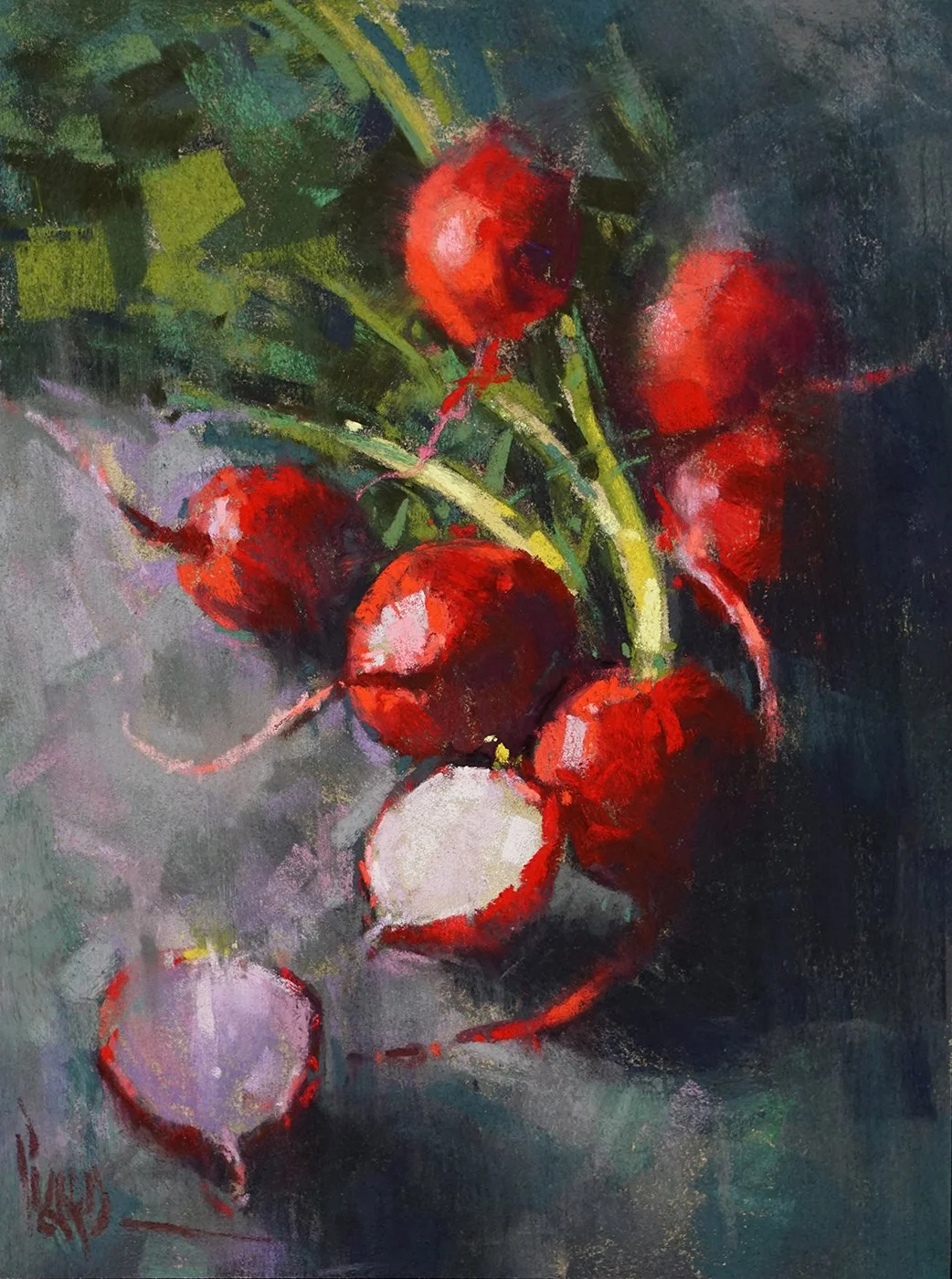
Radishes, 12x9” Pastel on LaCarte
Notice how some edges are crisp and sharp, like the bright snap of light on the cut radish. Others melt softly into shadow. Up in the greens, the marks break apart and let the air pass through. And at the bottom, the darkest radishes dissolve into the background until you can't quite tell where one ends and another begins.
Hard, sharp, soft, broken, lost. Together, that variety creates a symphony in the painting. It's what makes the ensemble breathe with life rather than feel stifled.
If that symphony had a name, it would be called Edges. Truth is, I've been a bit obsessed with edges for years.
What pulls me in is the way edges create an airy atmosphere, imbue a painting with mystery and mood, and bring a sense of focus, dimension, and depth, even within the compressed space of a small still life.
Hearing the sound of the surface puts me in good company. James McNeill Whistler titled his paintings like music, his Nocturnes, Arrangements, and Symphonies, because he understood that a painting is built from relationships of color, value, and edge. That same language runs through every subject I paint.
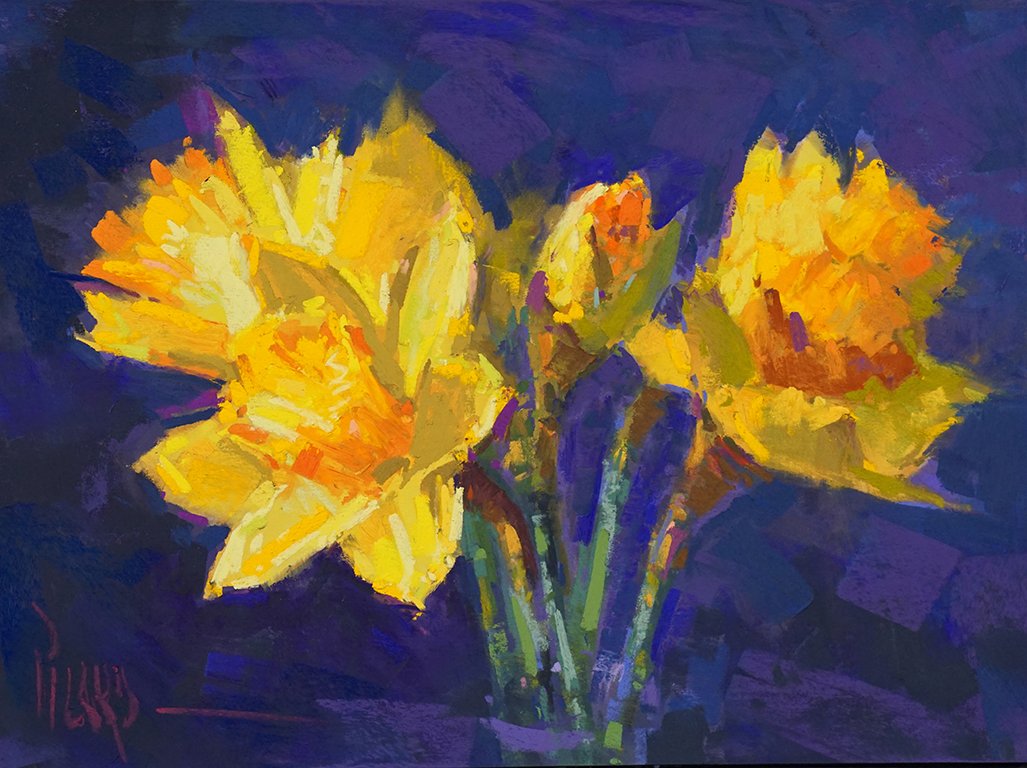
Spring Daffodils, 9x12” Pastel on UART 400
Take the daffodils, glowing yellow against deep blue. They tell the very same story, broken color, crisp accents, edges lost and found.
Two totally different paintings, one thread weaving through them all.
If your eye is drawn to loose, expressive, atmospheric work, that pull you feel is the painter in you. And this thread, the rich variety of edges, is how you begin painting that way yourself. It's the heart of a looser, more painterly style. Best of all, it isn't a gift some artists are simply born with. It's a language, and it can be learned.
Which is why I'm so glad to share something new with you.
I've taken everything I've learned from years of chasing after edges and poured it into a new mini course. My little symphony for pastel artists is called Edges.
In it, you'll learn to see, understand, and create the full range of edges in your own work, using simple still life subjects like the very radishes and daffodils above. By the end, you'll look at your subject with new eyes and start painting work that truly breathes.
Here's what's inside:
4 lessons across 10 videos, including 3 painting demonstrations
A growth exercise with every lesson
The downloadable Edges Guide PDF and supply list
A bonus challenge, plus lifetime access to revisit anytime
Self-paced, with lifetime access.
Come explore edges with me,
Alain