From portrait painter to pasture

Over 20 years ago, I visited a local farm to learn how to use my new camera and paint something different. I was a portrait artist then, learning to branch out. These paintings came from that time.
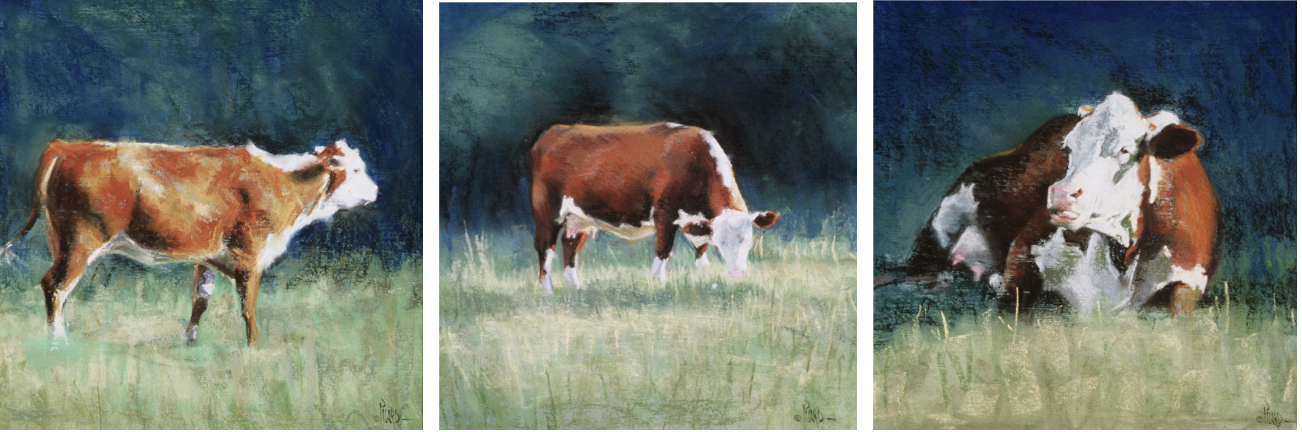
Local Cows, 9x9” pastels on primed Museum Board

I still love these cows. They’re fun to see again after all these years. They were painted in pastel on museum board gessoed with Art Spectrum blue-gray acrylic pastel primer. Look at the color. The cows are painted in their own reds, browns and whites, set against a cool, dark backdrop.

Working in oils during that same season, I painted an oil on board of this striking character up close.
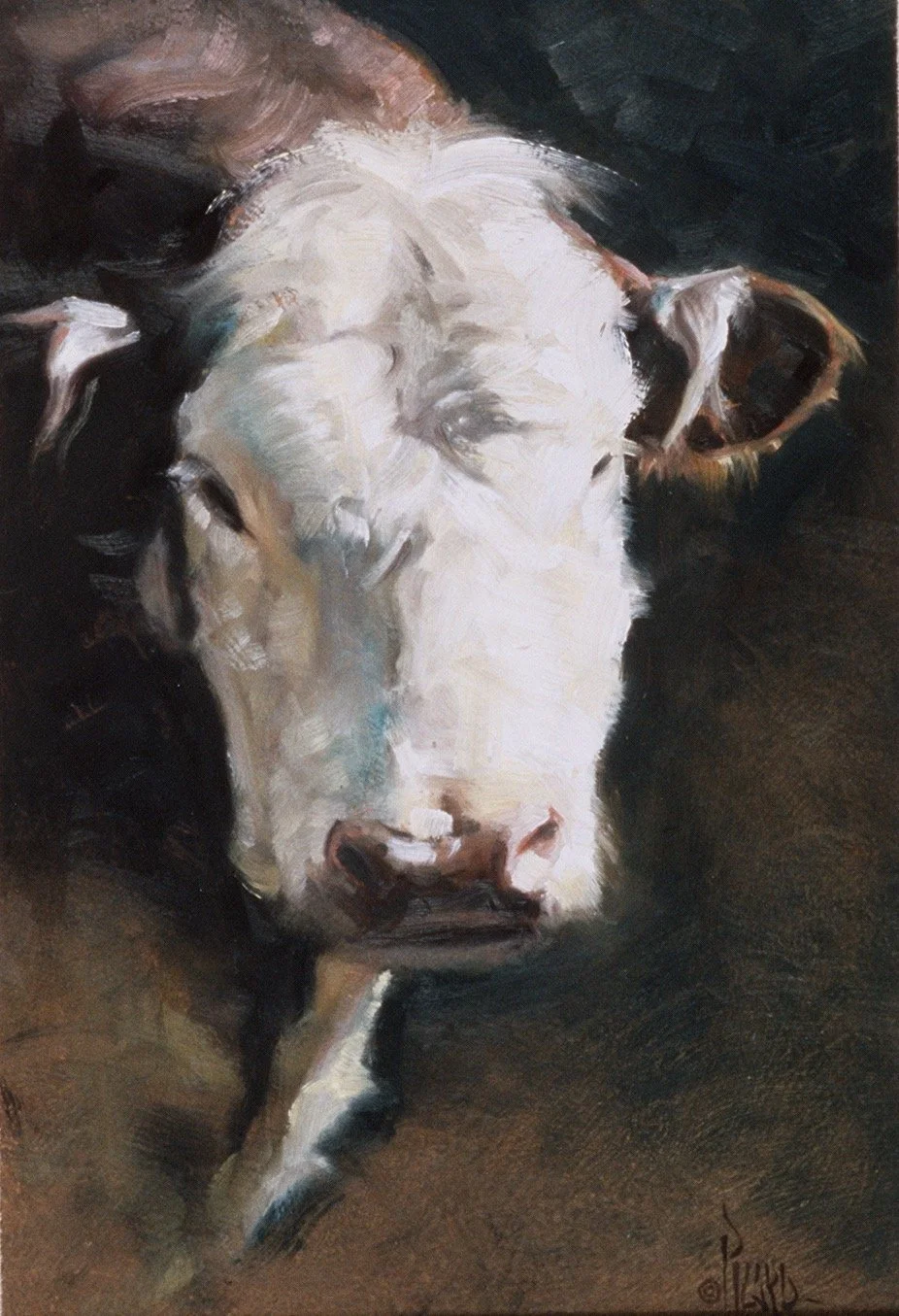
Portrait of a Cow, 12x8” oil on board

It has a very Rembrandt mood, with chiaroscuro light bringing the face out of the shadows. I like the brush strokes here, loose and broken. In a real sense, I was still painting portraits. The cow was my sitter for the day.

Today, I’m much more of an impressionist. Bringing my own painterly approach to every subject, from landscape and animals to still life, florals, portraits and the figure. The throughline is expressive mark making, vibrant color, and painterly realism Here’s what that looks like with cows this month.
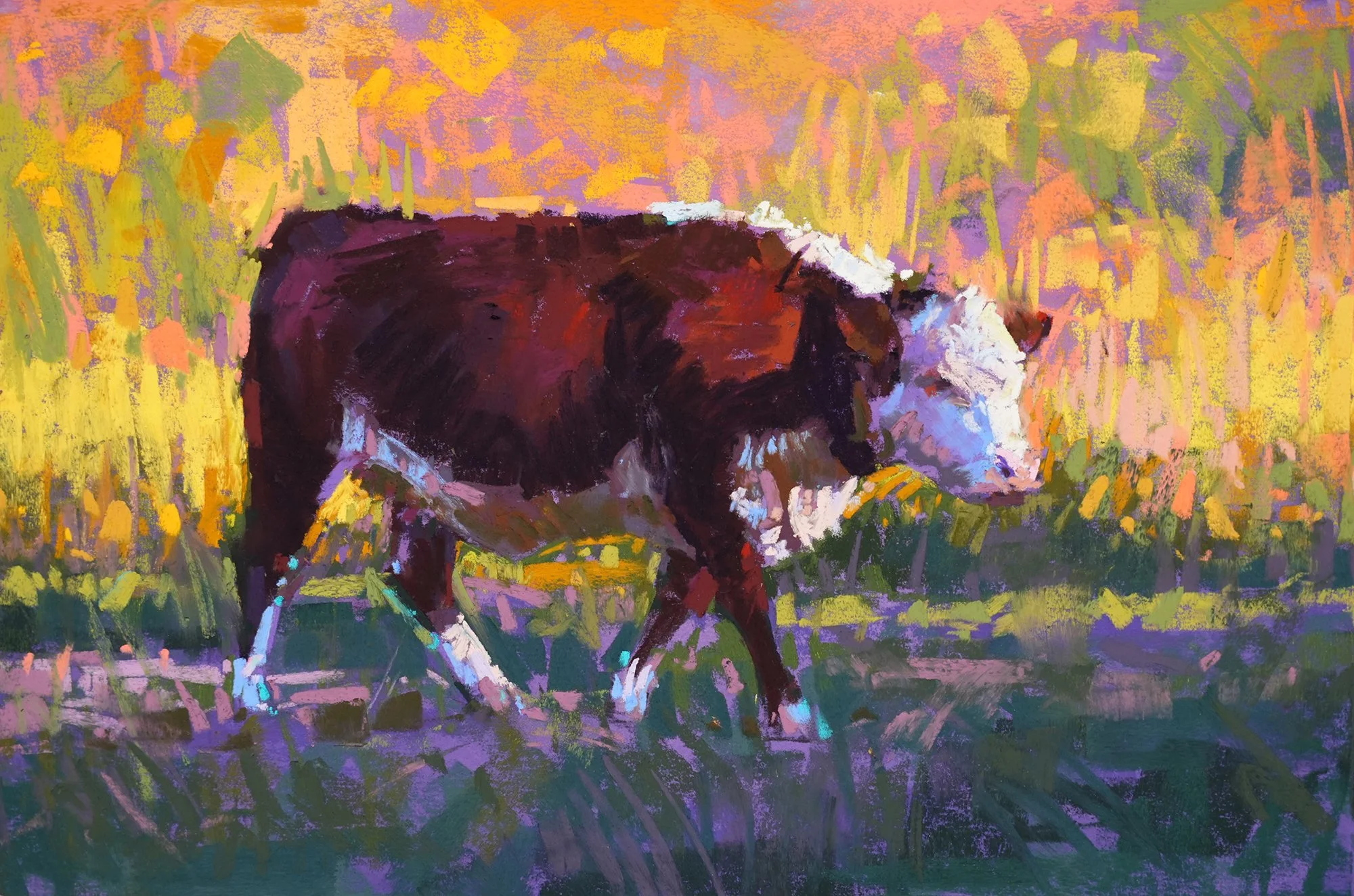
Morning Greeting, 8x12” pastel on UART400

These begin on UART 400 with a violet underpainting, and you can see it glowing through. Instead of painting the cow’s colors, I’m painting the light. Gold and orange where the sun hits, violet in the shadows. Up close, the character comes through in a few confident marks, like the white face catching the light.
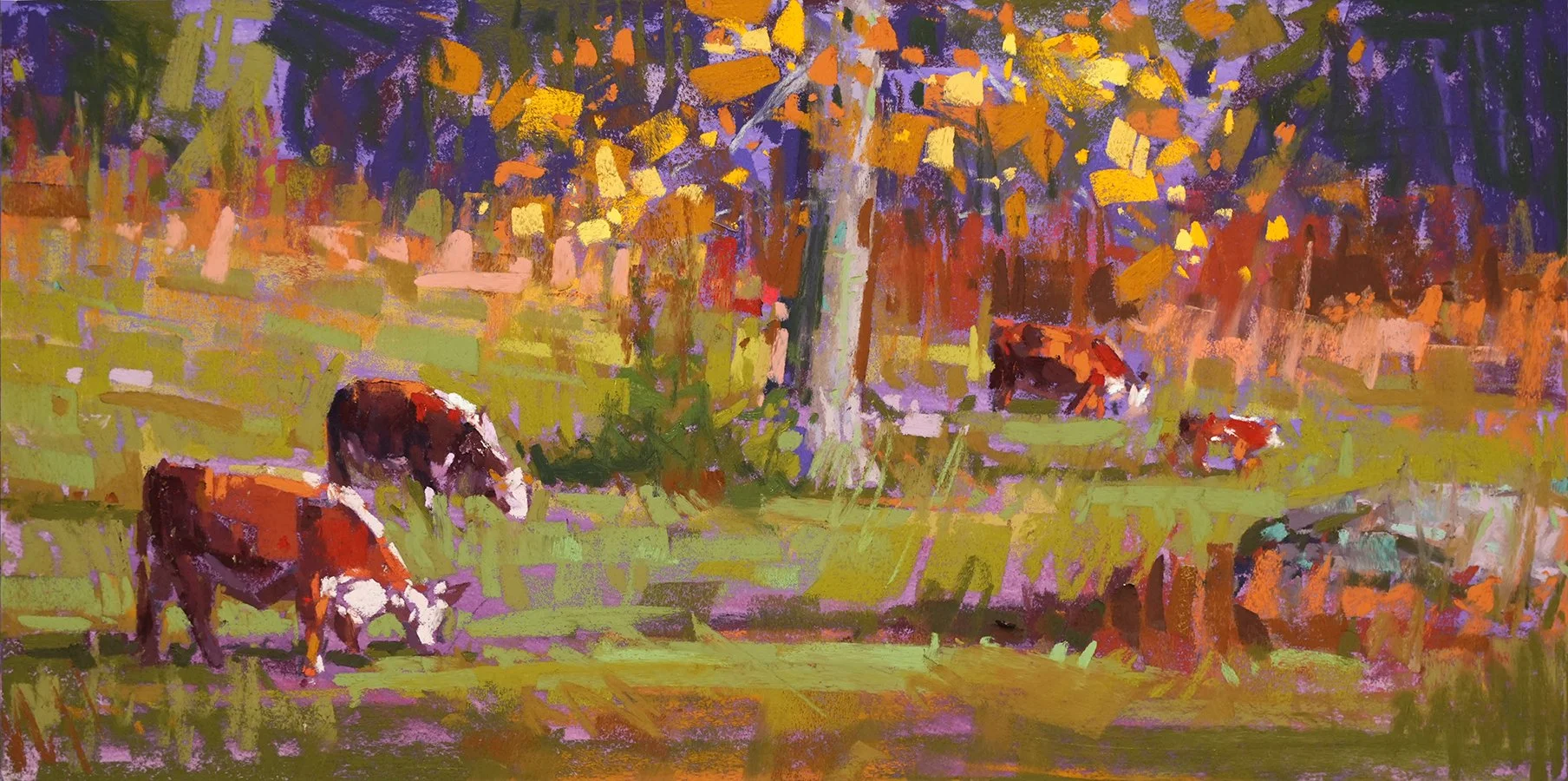
Autumn Grazing, 7x14” pastel on UART400

Step back into the pasture, and the cows become a handful of shapes in the landscape. They aren’t the sitter anymore. They’re part of the story the light is revealing.

We don’t stay the same as artists. 

Our creativity evolves along with our curiosity, skill, passion, knowledge and experiences. Looking at these cows side by side, I can see that journey on the surface, revealing how I’ve changed and grown. 

It’s good to reflect on your artist’s journey sometimes, and discover how far you’ve come. Why not take out something you did years ago, whether it was in art class, a school project, or a painting from a prior season. Then compare it to a recent work. Where do you see growth? 

If you could pick up on a theme started long ago, what subject would you love to revisit with fresh eyes?
I rediscovered cows with great joy and a new perspective. 

What will you discover?

If you’ve been wanting to paint with greater freedom and bolder color, join the waitlist for my Painterly Still Life Self-Study Course HERE
Faithful friend, fearless guardian

Behind my friends' home, there was a small farm. A chicken coop, a horse in the field, a few goats wandering through, and four joyful daughters coming and going in the midst of it all. Watching over every one of them was Bear, a Maremma Sheepdog the size of a small bear himself. Hence the name.

You really cannot appreciate just how big this dog is until you stand next to him. He warded off coyotes at night, kept the chickens safe, played with the goats like they were his own siblings, and looked after those four girls as if it were his sworn duty. Bear lived outside in his element, content in his place at the heart of that family.

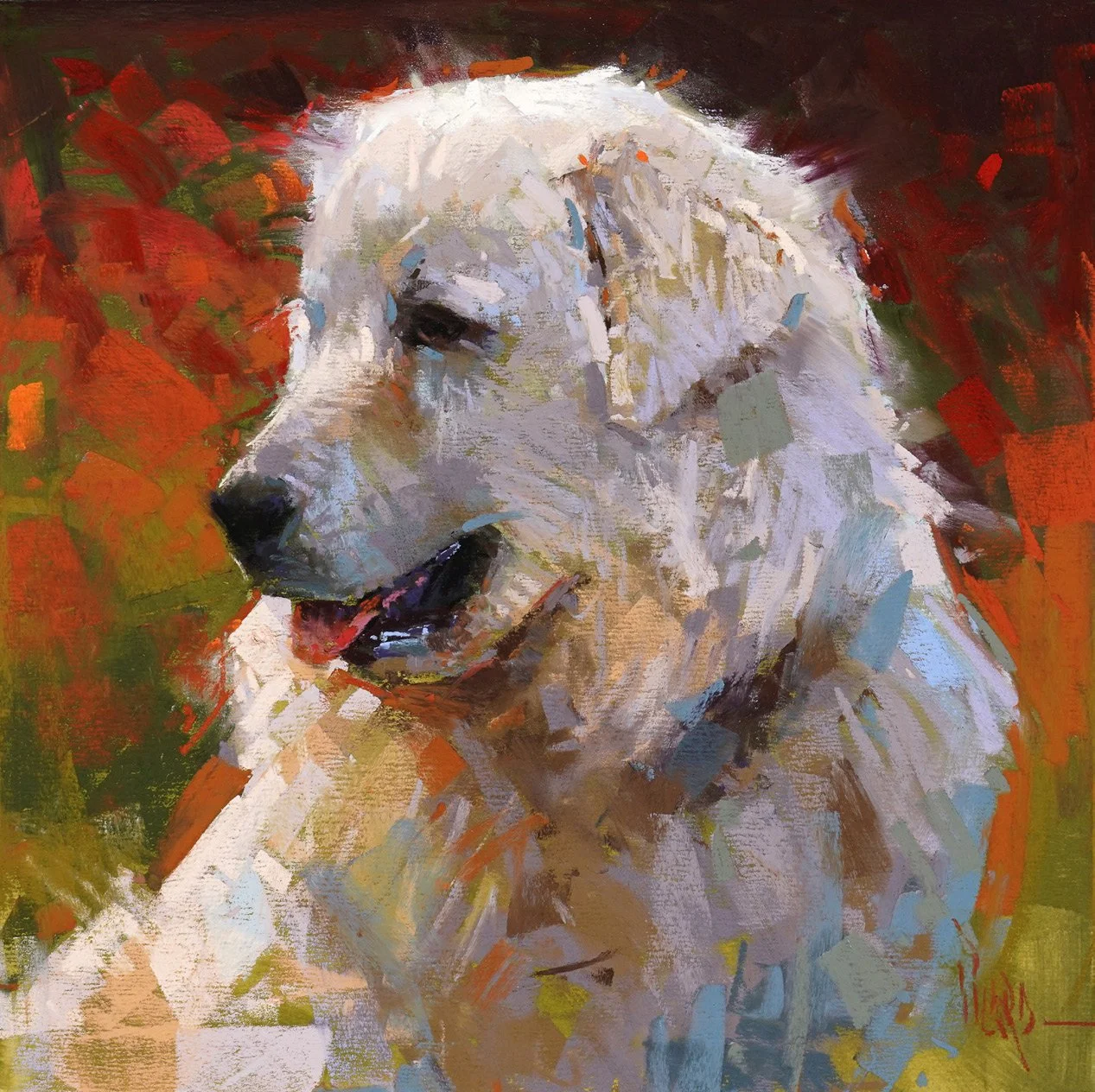
Bear, 12x12” pastel

When I went to photograph Bear for a painting, I found him right at home, out among the animals he loved. The portrait above came directly from that afternoon at the farm.

This painting of Bear highlights something I want to share with you this week. The most important thing to capture wasn't his coat, or even his likeness exactly. It was his spirit. That watchful, playful, gentle, enormous spirit. And spirit, it turns out, is exactly what the painterly approach aims to reveal.

There is a freedom that lives inside loose, expressive painting. The marks suggest more than they describe. Color carries feeling. The eyes, big contour shapes and a few telling edges do the heavy work of likeness, so the rest of the painting can breathe.

A handful of accurate shapes and well placed darks will carry more recognition than hours of carefully rendered fur. Fresh color brings a pet to life in a way that gray toned realism rarely reaches. And the love and familiarity you already have for your subject will find its way onto the surface, if you give yourself permission to stay loose.

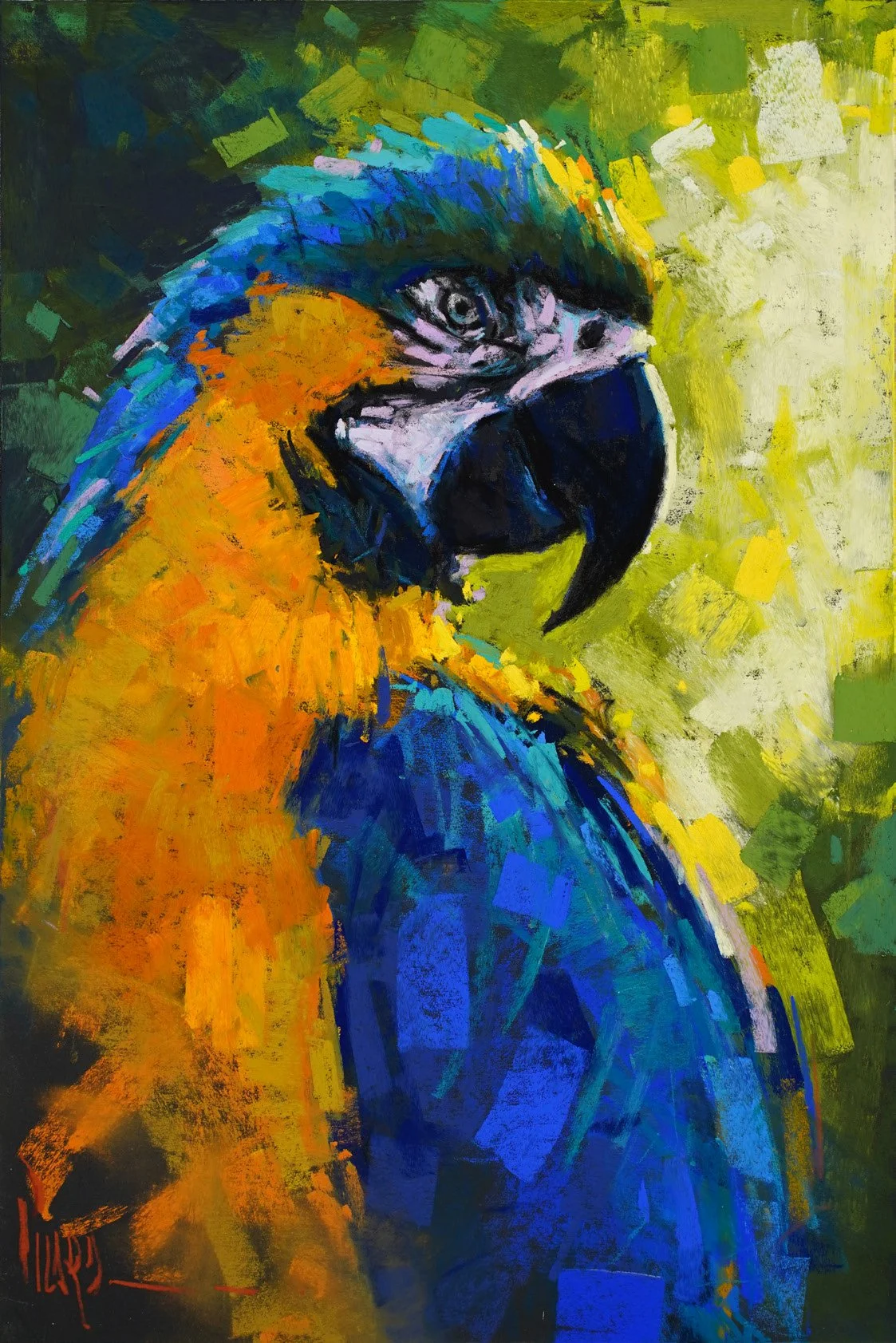
Blue & Gold Macaw, 15x10” pastel

This approach works across species, too. The same painterly thinking that brought Bear to life carries a brilliant blue and gold macaw painted on a dark surface, pulling vibrant feathers out of the shadows with bold direct strokes of soft pastel. These animals come from different worlds, yet carry the same painterly heartbeat.

If you'd like to explore this kind of painting for yourself, I'd love to invite you into my Painterly Pet mini-course. It is a focused journey through evaluating your reference, designing your portrait, and painting two different pets in two distinct ways. You'll work through the painterly approach with a dog painted on a light surface (yes, Bear is the demo), and then take a walk on the wild side with an exotic macaw portrait on a dark toned surface.

Learn more about The Painterly Pet here.

May this week bring you joy at the easel, an adoring smile from your pet of choice, and maybe even a furry friend to paint along the way.


If there’s a pet curled up nearby as you read this, take a moment to really see them. That is where the painting begins. And since The Painterly Pet is self-paced, you can begin whenever inspiration strikes.

Keep painting,

Alain