From portrait painter to pasture

Over 20 years ago, I visited a local farm to learn how to use my new camera and paint something different. I was a portrait artist then, learning to branch out. These paintings came from that time.
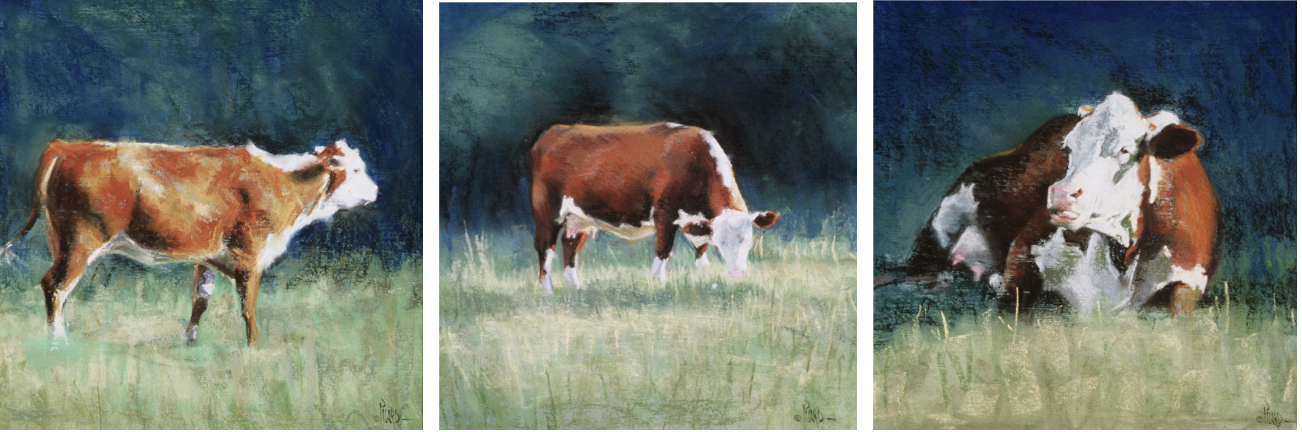
Local Cows, 9x9” pastels on primed Museum Board

I still love these cows. They’re fun to see again after all these years. They were painted in pastel on museum board gessoed with Art Spectrum blue-gray acrylic pastel primer. Look at the color. The cows are painted in their own reds, browns and whites, set against a cool, dark backdrop.

Working in oils during that same season, I painted an oil on board of this striking character up close.
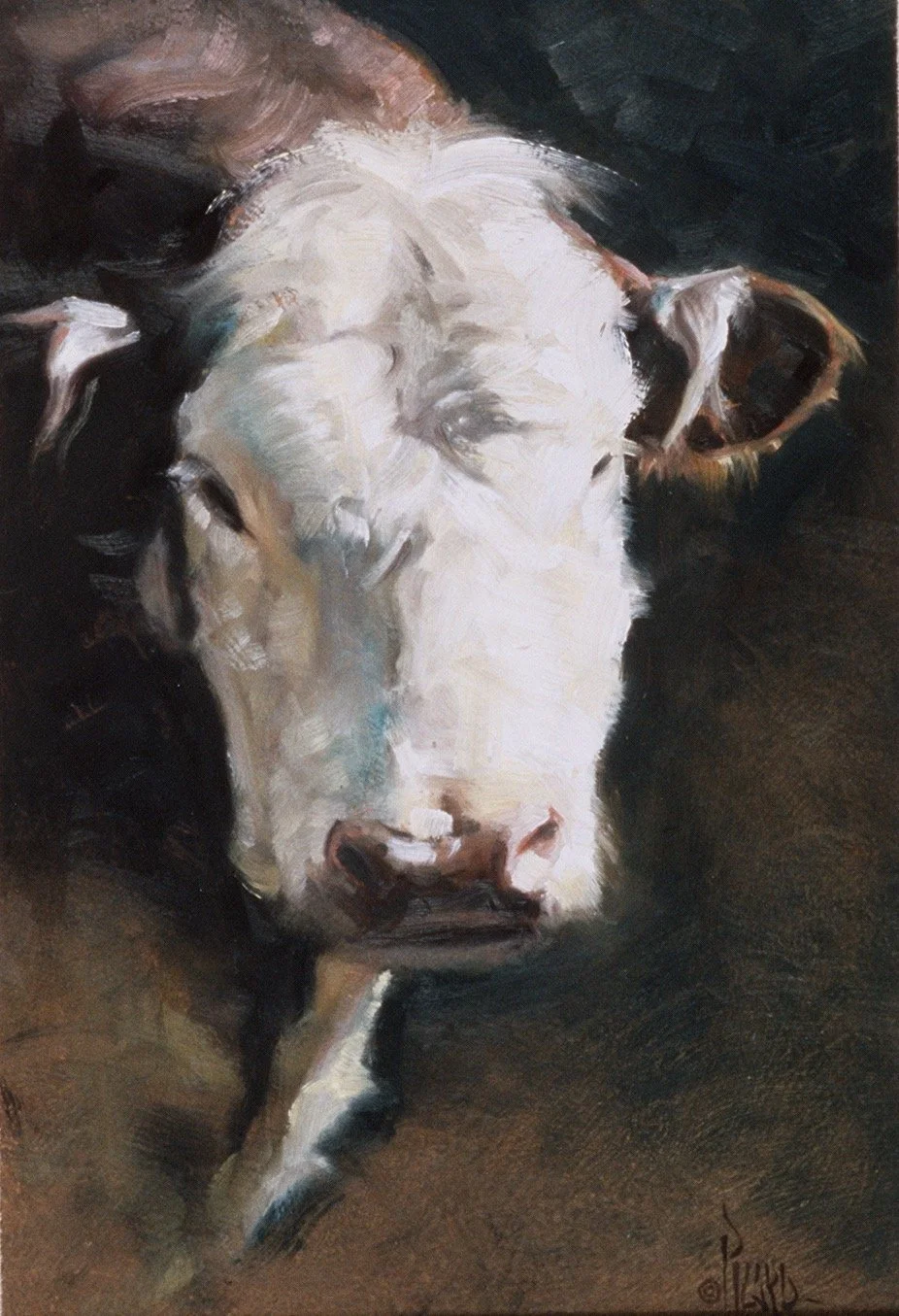
Portrait of a Cow, 12x8” oil on board

It has a very Rembrandt mood, with chiaroscuro light bringing the face out of the shadows. I like the brush strokes here, loose and broken. In a real sense, I was still painting portraits. The cow was my sitter for the day.

Today, I’m much more of an impressionist. Bringing my own painterly approach to every subject, from landscape and animals to still life, florals, portraits and the figure. The throughline is expressive mark making, vibrant color, and painterly realism Here’s what that looks like with cows this month.
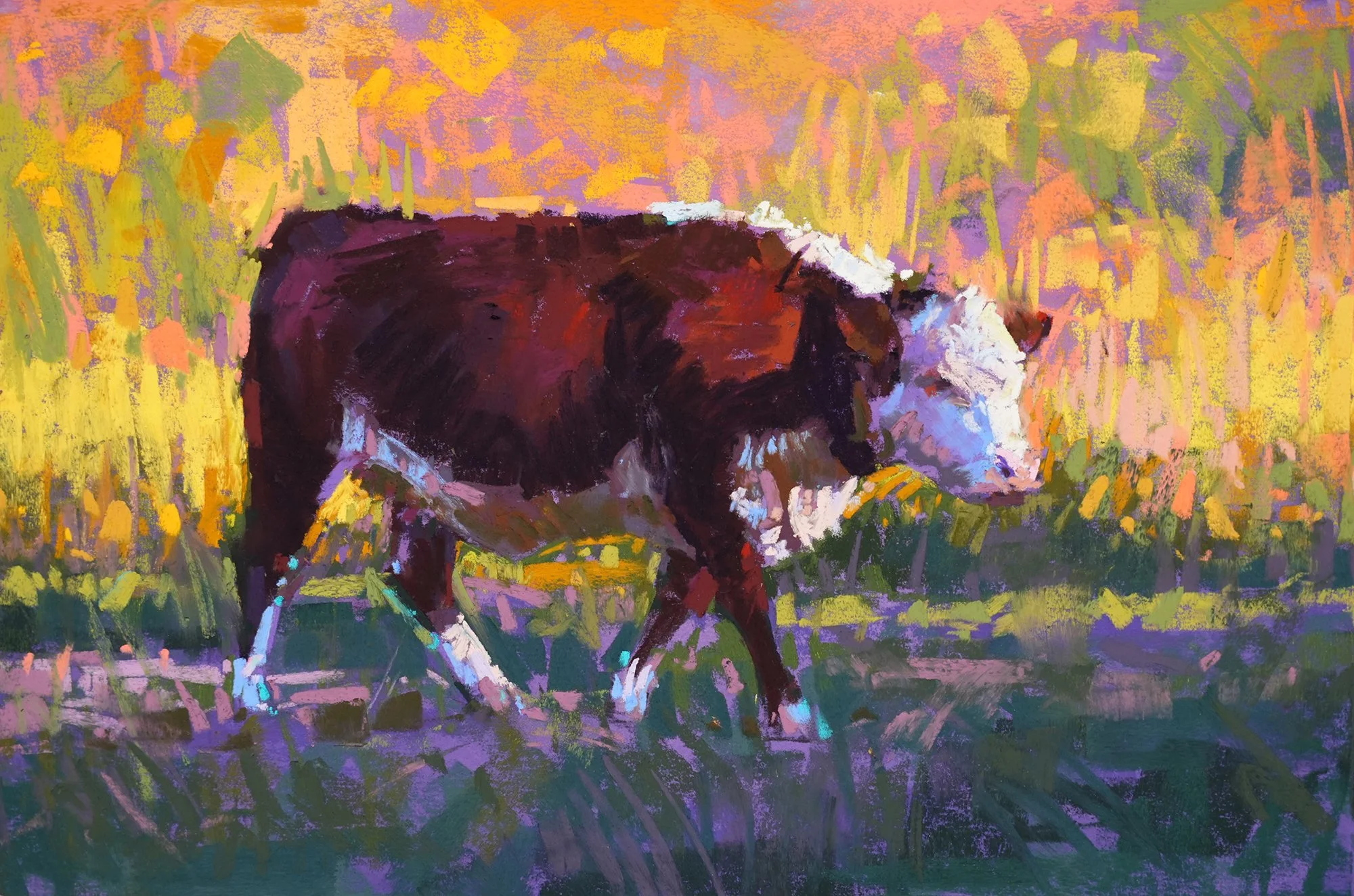
Morning Greeting, 8x12” pastel on UART400

These begin on UART 400 with a violet underpainting, and you can see it glowing through. Instead of painting the cow’s colors, I’m painting the light. Gold and orange where the sun hits, violet in the shadows. Up close, the character comes through in a few confident marks, like the white face catching the light.
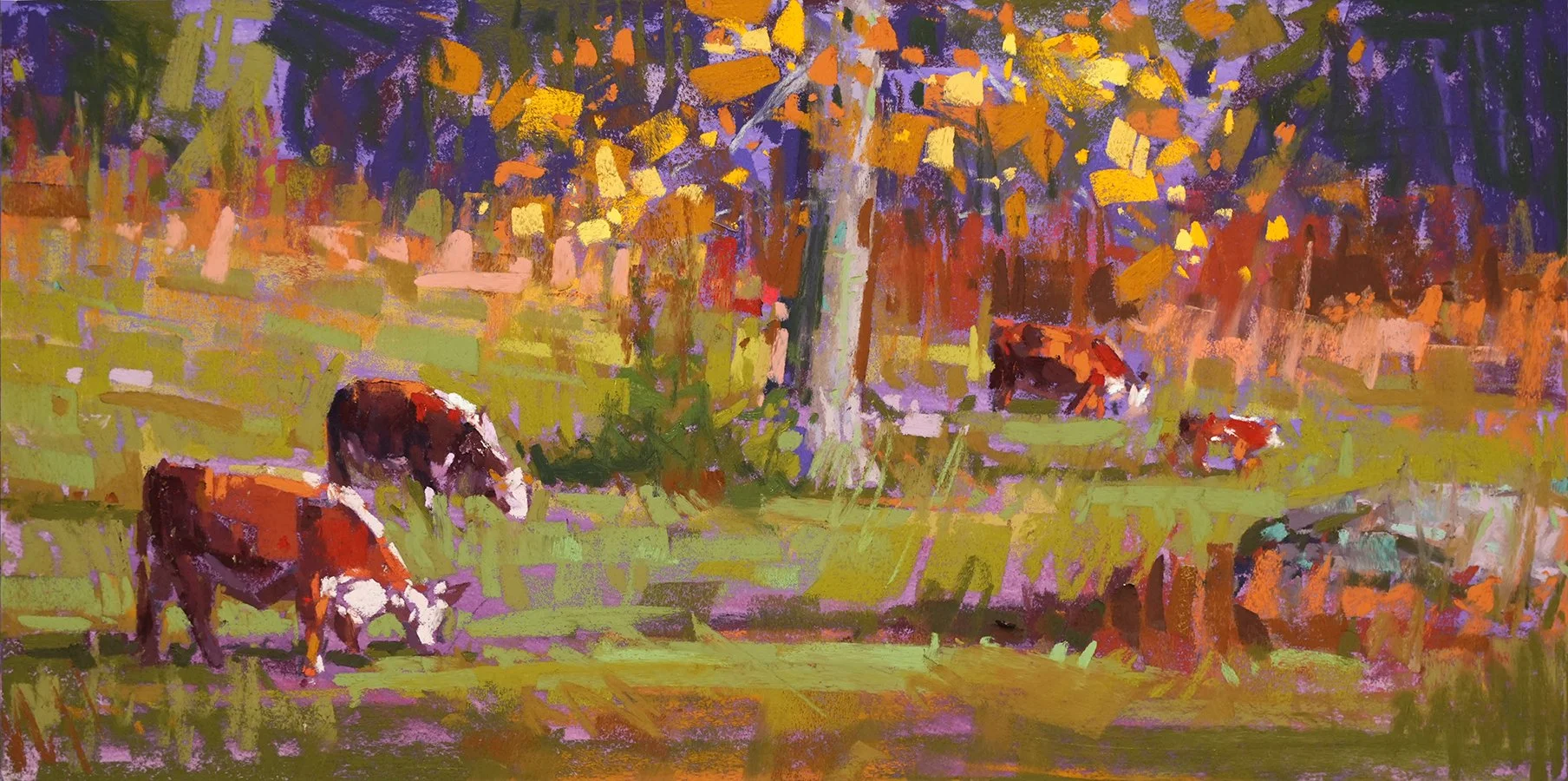
Autumn Grazing, 7x14” pastel on UART400

Step back into the pasture, and the cows become a handful of shapes in the landscape. They aren’t the sitter anymore. They’re part of the story the light is revealing.

We don’t stay the same as artists. 

Our creativity evolves along with our curiosity, skill, passion, knowledge and experiences. Looking at these cows side by side, I can see that journey on the surface, revealing how I’ve changed and grown. 

It’s good to reflect on your artist’s journey sometimes, and discover how far you’ve come. Why not take out something you did years ago, whether it was in art class, a school project, or a painting from a prior season. Then compare it to a recent work. Where do you see growth? 

If you could pick up on a theme started long ago, what subject would you love to revisit with fresh eyes?
I rediscovered cows with great joy and a new perspective. 

What will you discover?

If you’ve been wanting to paint with greater freedom and bolder color, join the waitlist for my Painterly Still Life Self-Study Course HERE
Autumn Still Life Painting: Finding Beauty in Unlikely Companions

Autumn has a way of slowing us down. Farm stands spill over with gourds, squash, onions, and apples in every shape and size. The light turns low and golden. For pastel artists, this season is full of gifts.

Here’s something I keep discovering in new ways: the magic isn’t in finding the perfect subject. It’s in the relationships between the forms.

Unlikely Companions

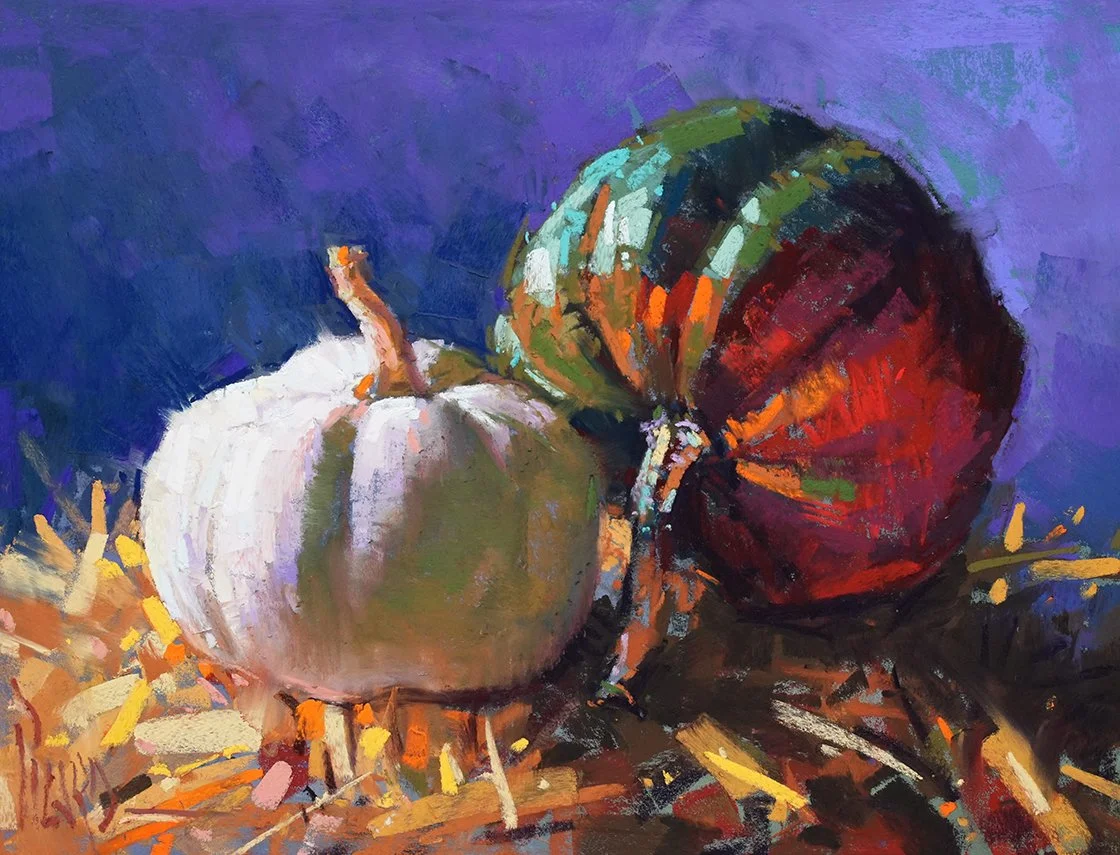
I almost painted a dark, dramatic gourd all by itself. Deep shadows. A signature green streak. It was clearly the star of the show.

But something felt incomplete. It needed someone to talk to.

Enter a small, pale pumpkin I’d almost passed by at the farm stand. This unassuming character was the color of morning fog.

That’s when a harvest romance was born.

Harvest Romance, 9x12" pastel on UART

That pale pumpkin wasn’t there just to support its bolder companion. It changes how you see the gourd. The reds grow richer. The greens come alive. The shadows take on new depth that couldn’t be felt in isolation.

It’s a timeless story. We become more ourselves in the presence of another.

Everything on the Harvest Table Has a Personality

The same story plays out across the whole harvest table.

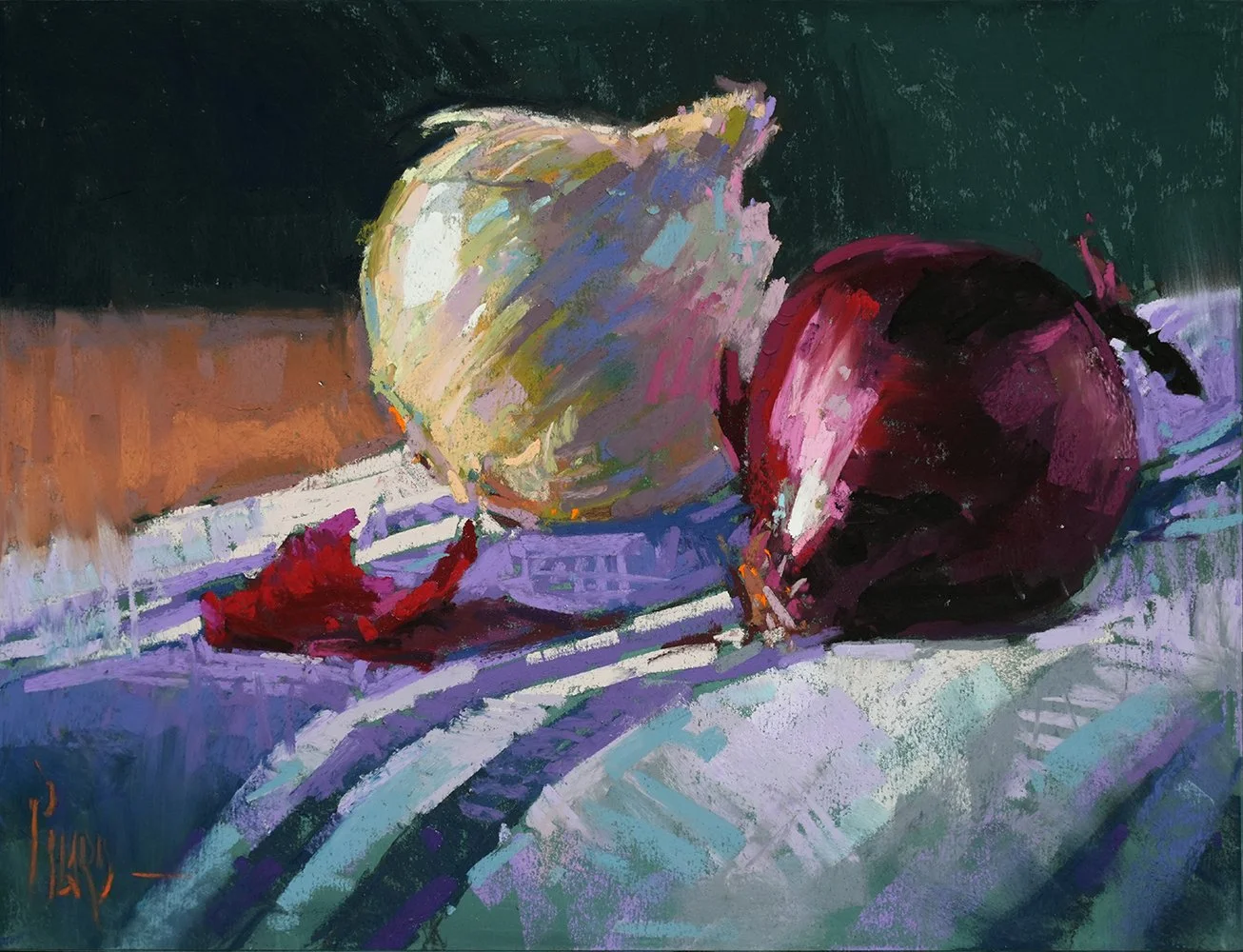
Take two onions. One is pale and papery, catching the light. The other is deep red, heavy and quiet in shadow. Set them side by side on a striped linen cloth, and suddenly they’re not just onions. They’re characters. The white one glows brighter because of its dark companion. The red one feels richer next to all that light.

Paper & Linen, 9x12" pastel on UART 400

Let Your Subjects Start Talking

When I set up a still life, I’m not hunting for one perfect object. I’m looking for a conversation.

Choose a pair. Pick two things that differ in size, color, or texture. A rough gourd beside a pale pumpkin. A white onion beside a red one. A smooth apple next to a copper kettle. Place them under a single light and notice how each one changes the other.

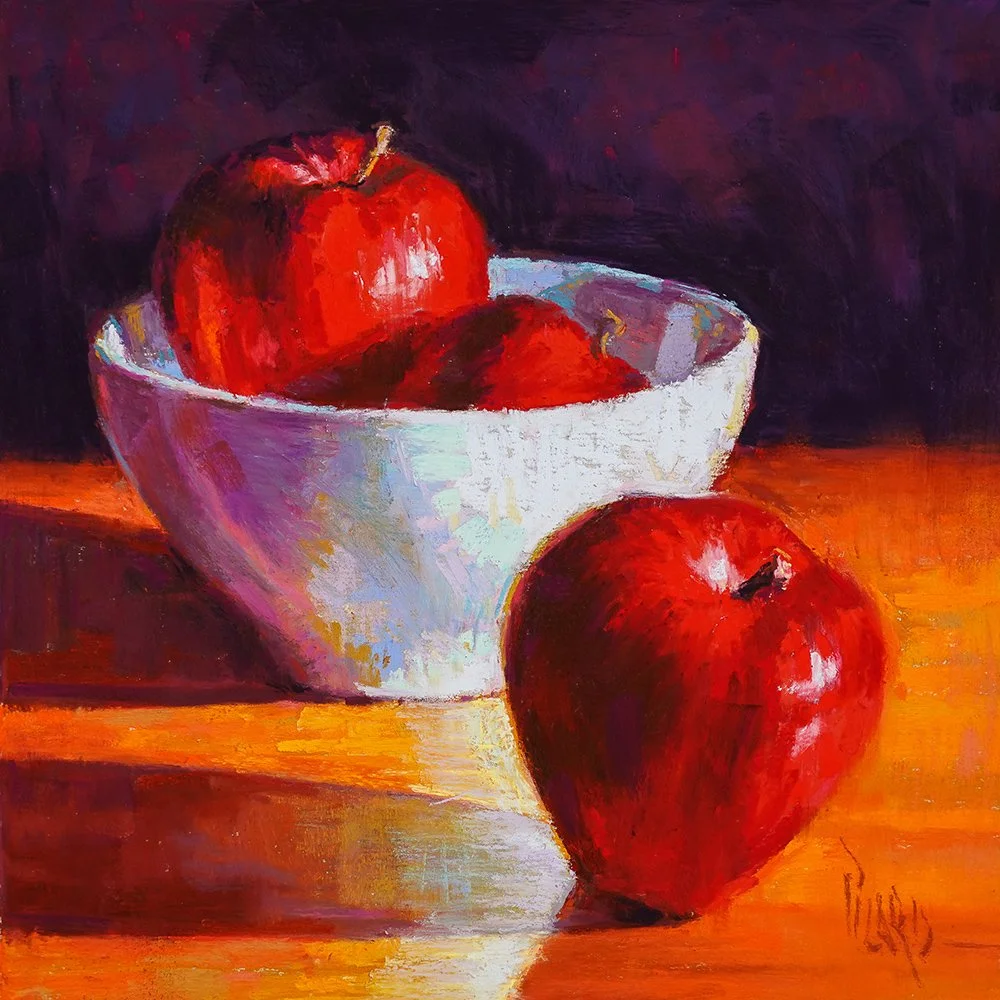
Add a third voice. A bowl, a curl of onion skin, or a cloth with some pattern. Now there’s rhythm, and a story begins to unfold. Sometimes the story is simply who’s inside the bowl, and who’s on the outside looking in.

Outside the Bowl, 8.75x8.75" pastel on UART 400

Then edit. You’re not painting everything on the table. You’re discovering which elements belong together. Keep the background simple so your characters can shine.

Your Autumn Invitation

The autumn leaves don’t rush to fall. Neither should we.

Visit your local farm stand or orchard, or just open your pantry. Bring out a few things that catch your eye, including that one you almost overlooked. Arrange them on your kitchen table with a single light, and see who becomes an unlikely companion.

Whether you paint, sketch, or simply set out something beautiful to enjoy, this season invites us all to slow down and notice relationships.

The conversations might surprise you.

Need a little inspiration first? Watch my FREE Orchard Apples lesson HERE! 

If still life storytelling speaks to you, the self-study edition of my Painterly Still Life Online Course releases on December 2, 2026. Learn at your own pace. Join the waitlist here.