
How to Stop Overworking Your Paintings: Try the 100-Stroke Challenge
Want to loosen up your landscapes and stop overworking them? Try this.
Recently I shared an exercise in an online workshop called Landscape Week, and it had a major impact on the artists who tried it.
It's called the 100-Stroke Challenge.
So many artists were genuinely surprised by how much they could say with so few marks. When every stroke counts, there's no room to fuss. Each mark gets placed with intention, and the painting gains a clear voice.
This exercise teaches economy of strokes as you suggest the scene with limited colors and marks. Here's how it goes. Pick a landscape photo reference. Then choose a limited palette of just 10 to 12 pastels: with a few lights, a few middle values, and a few darks. On a small sheet of pastel paper, capture the scene in just 100 strokes. Count each stroke as you make it, and when you reach 100, you're done!
This isn't about making a finished painting. It's about learning to say more with less.
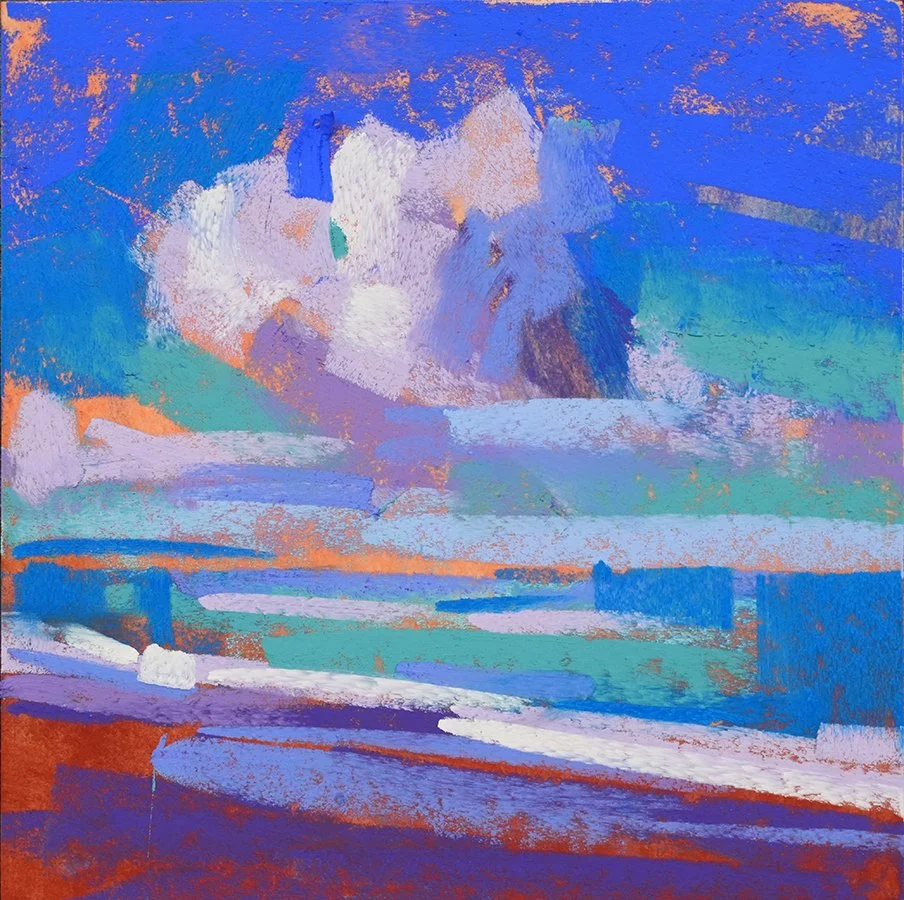
Here is my 7x7” 100-Stroke exercise from Landscape Week. About a dozen sticks and 100 strokes are more than enough to create energy and impact. You can do this too!
Remember, this is about playfulness over perfection. Your study will likely be loose, a little messy and unfinished, and that's how it should be. Don't let your inner critic sneak back in to clean it up!
Give it a try this week. You might be surprised at how much 100 strokes can say.
Keep painting,
Alain
If this exercise stirs something in you and you'd like to go further with your marks, my mini-course Expressive Mark-Making is a four-lesson study built around one simple subject, the pear, so all your attention can go into the marks themselves. You can learn more here.