How to Stop Overworking Your Paintings: Try the 100-Stroke Challenge

Want to loosen up your landscapes and stop overworking them? Try this.

Recently I shared an exercise in an online workshop called Landscape Week, and it had a major impact on the artists who tried it.

It's called the 100-Stroke Challenge.

So many artists were genuinely surprised by how much they could say with so few marks. When every stroke counts, there's no room to fuss. Each mark gets placed with intention, and the painting gains a clear voice. 

This exercise teaches economy of strokes as you suggest the scene with limited colors and marks. Here's how it goes. Pick a landscape photo reference. Then choose a limited palette of just 10 to 12 pastels: with a few lights, a few middle values, and a few darks. On a small sheet of pastel paper, capture the scene in just 100 strokes. Count each stroke as you make it, and when you reach 100, you're done!

This isn't about making a finished painting. It's about learning to say more with less.
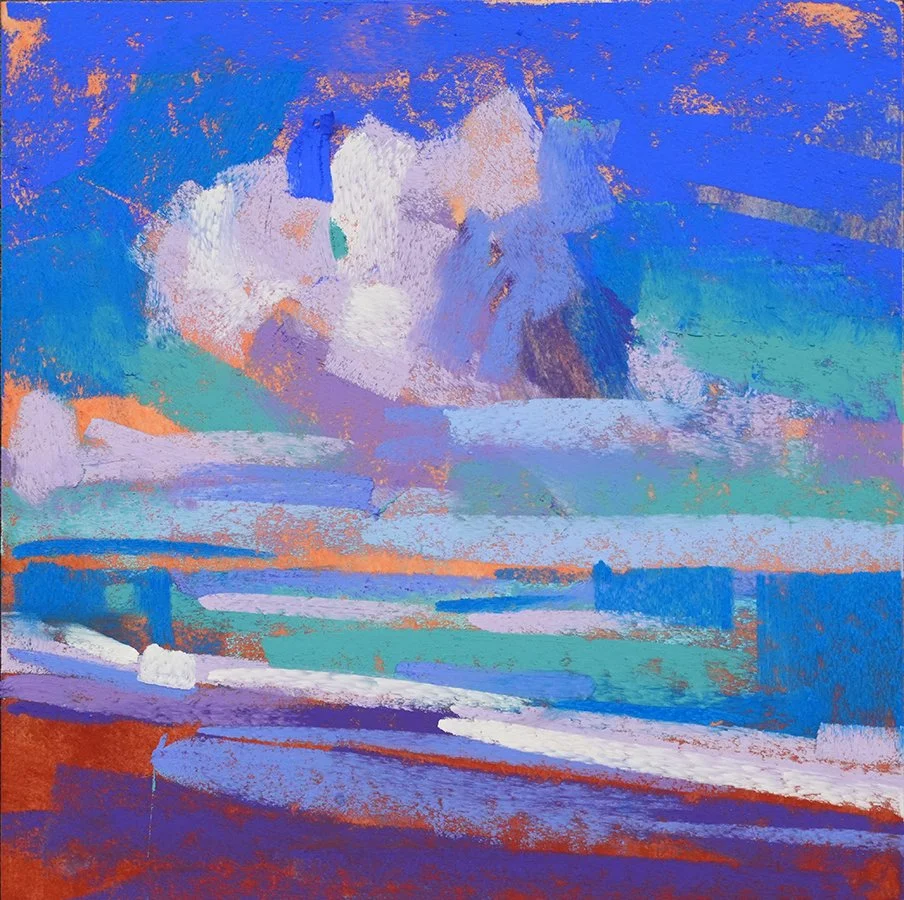
Here is my 7x7” 100-Stroke exercise from Landscape Week. About a dozen sticks and 100 strokes are more than enough to create energy and impact. You can do this too! 

Remember, this is about playfulness over perfection. Your study will likely be loose, a little messy and unfinished, and that's how it should be. Don't let your inner critic sneak back in to clean it up!

Give it a try this week. You might be surprised at how much 100 strokes can say.

Keep painting, 
Alain  

If this exercise stirs something in you and you'd like to go further with your marks, my mini-course Expressive Mark-Making is a four-lesson study built around one simple subject, the pear, so all your attention can go into the marks themselves. You can learn more here.
Beyond Green: How Expressive Color Brings Landscape Paintings to Life

Have you ever been overwhelmed by green?

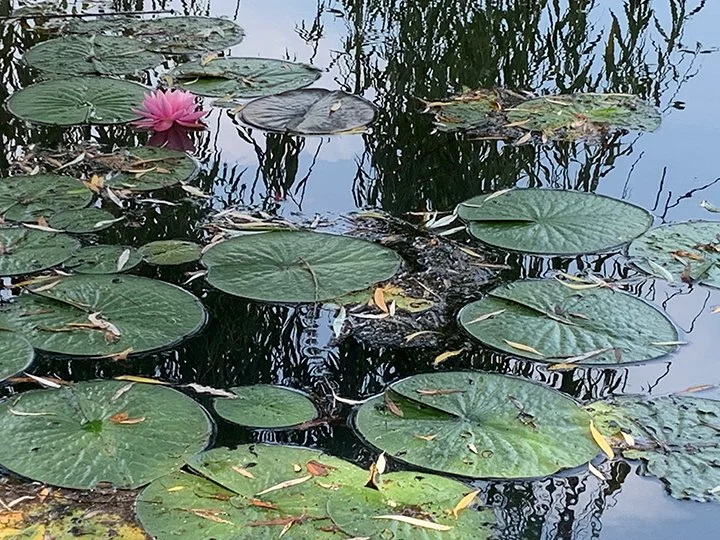
Everything in front of me that morning was green.
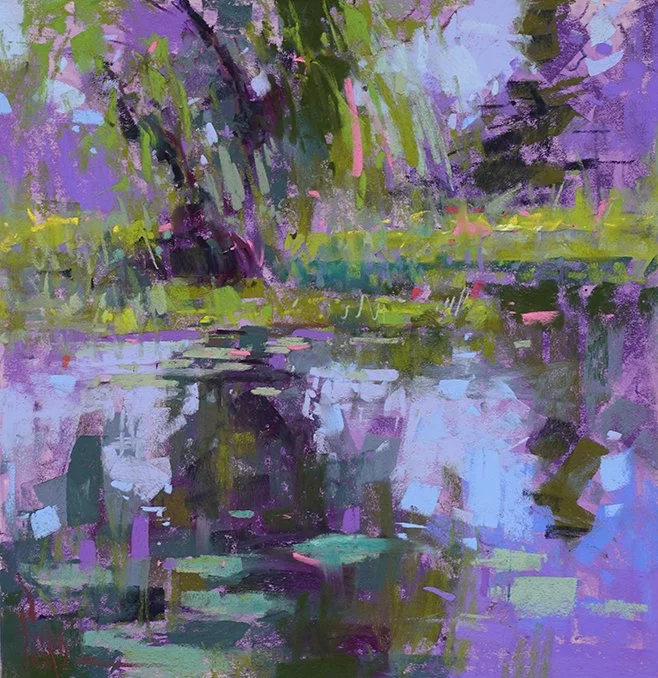
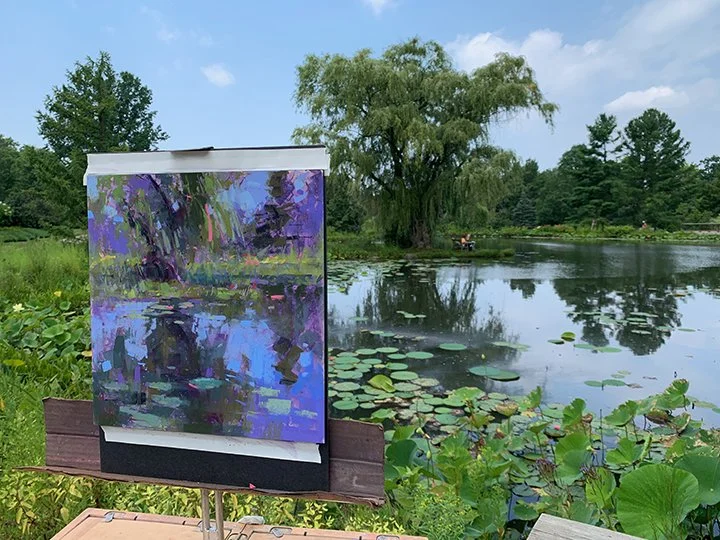
Green willow. Green pads. Green reflection running through green water. A summer lotus pond doing what a summer pond does best.

So I painted it violet.

Not because violet is a clever trick, and not because I was trying to be different. I painted it violet because after a few minutes of standing there, I stopped asking myself, “What color is that?” and started asking, “How does this place make me feel?” Two very different questions, and they lead to two entirely different paintings.

Lotus Pond, 12x12" pastel

Here's what I want to encourage you with, and it took me years to trust;

You can let go of description without letting go of design.

Look at the painting and you'll see the pond is still there. The willow sits where the willow belongs. The shoreline runs where it should. The reflection drops straight down beneath the tree and holds the whole square together. The pads get smaller as they travel back. Everything structural is faithful.

What I threw away was the detailed description. The local color. The tidy edges. Every fact about what a lily pad actually looks like when you lean over and stare at one.

All that information, and I used almost none of it.

That's the trade-off, and I’ll take it every time. Most of us think we owe the scene an accurate report. Truth is, we’ve got cameras for that. As artists, what we owe is an honest response.

Monet understood this better than anyone. He painted the same pond hundreds of times, and it was never really about the water. The surface was an excuse. An excuse to chase color, to arrange shapes, to make marks, to wonder. The pond gave him permission to play, and he took it for the rest of his life.


So here's my summons for you this summer.

Go stand in front of something green and refuse to paint it green.

Keep the design. Get the big shapes right. Put the darks where the darks belong. Then let the color be yours. Let it be violet, sienna, burgundy or gold, whatever your heart is longing for. Nobody who sees your painting will hold you to what was actually there. 

They'll only ask whether it feels alive. 

They want to feel what you feel.

And trust me, they will.

Keep painting,
Alain

This is the kind of playful discovery we do together during Landscape Week, coming up August 31- September 4. Three live lessons, three ways to loosen up.